Tree care for HOA communities and the teams that manage them.

HOA boards, community managers, and apartment teams get the same thing: scheduled rounds on the common areas, a written plan the board can actually read, and one number to call at 2am.

Who we work with

Three seats at the table, three different problems.

HOA and condo boards

You are volunteers with a duty to the owners, and the thing you are trying to avoid is a special assessment nobody saw coming. We put every tree on paper with a price next to it, so the board is voting on a plan instead of reacting to a bill.

Community management firms

You carry a dozen associations and get graded on how fast you answer. You get one point of contact, per property invoicing with photos attached, and paperwork for your vendor file on request, sent before the first job rather than chased after it.

Apartment and multifamily

Limbs over the parking area, overgrowth blocking a walkway light, cleanup that cannot block a drive lane at 8am. We schedule around residents and leasing traffic, and we clear access first.

A tree program, not a pile of one off invoices.

Communities usually buy tree work the same way: a tree fails, somebody calls three numbers off a truck door, and the board approves the cheapest bid under pressure. That is the most expensive way to own trees. Failures cost more than pruning, and emergency pricing costs more than scheduled pricing.

We start the other way around. An expert arborist walks the entire property once, in daylight, with the manager or a board member if you want to come along. Every tree in the common areas gets looked at: species, size, condition, what is over a roof, what is over a walkway, what is over a parked car. Risk assessments follow TRAQ methodology.

The written plan is the product.

What you get back is a document, not a number. Every tree is photographed and located. Every recommended job carries its own price, whether that is a clearance prune or a hazard tree removal. The whole list is ordered by urgency and split into phases, so a board can approve phase one this quarter and put phases two and three into next year’s budget.

Boards set budgets in the fall for the next calendar year. The plan is built to drop into that cycle without anybody retyping it.

Scheduled rounds, so nothing arrives as a surprise.

Once the plan is approved, the work runs on a calendar you can see. Routine pruning happens in its season. Clearance over walkways, signs, and light poles gets checked on the same round. Crews are trained to ANSI A300 standards, the industry specification that treats topping, flush cuts, and spiking a tree that is staying as bad practice.

Between rounds, the plan gets refreshed once a year. Trees change. A tree that was fine two seasons ago can be a phase one item now, and you would rather find that out on a scheduled walk.

One number, whether it is Tuesday or 2am.

The same contact who runs your scheduled work runs your storm response. When something comes down overnight, crews clear the drive lanes and walkways first so residents can get out in the morning, then deal with the tree. You get photos of the site before anything is moved, which is what the association’s insurer will ask for.

We are licensed and insured, and we are glad to talk through coverage with your manager or your board before any work begins. The same program runs on office parks and mixed portfolios too, under commercial tree service.

Get the written assessment

How it works

Four steps, then it repeats.

Walk the property

An expert arborist covers every common area on foot and looks at every tree, not just the ones somebody complained about.

Written plan

Photos, locations, per tree pricing, ordered by urgency and split into phases you can approve separately.

Scheduled rounds

Approved work runs on a calendar. You know what is happening and roughly when, before the season starts.

Annual refresh

The walk repeats, the plan updates, and next year’s budget number is ready before you need it.

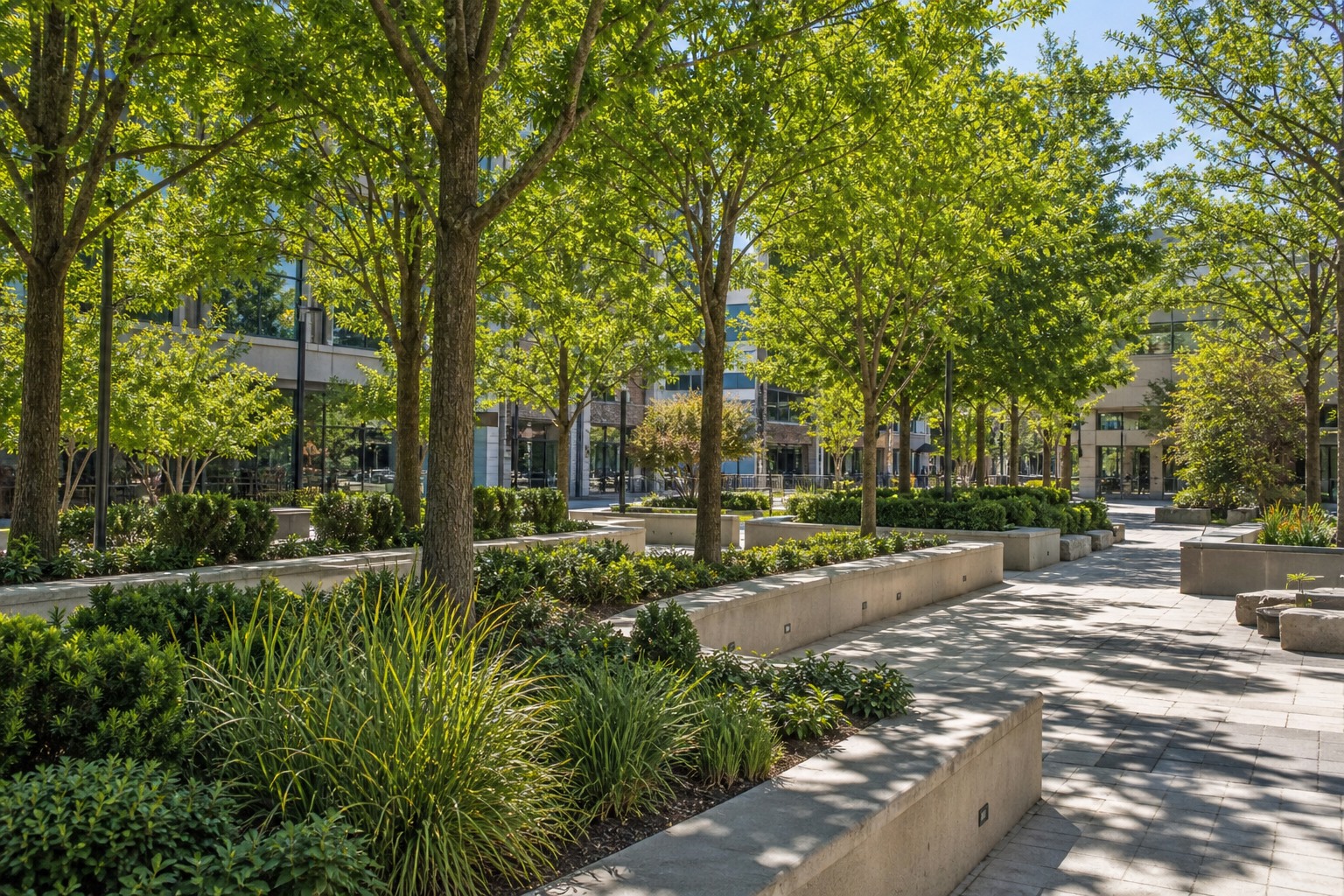
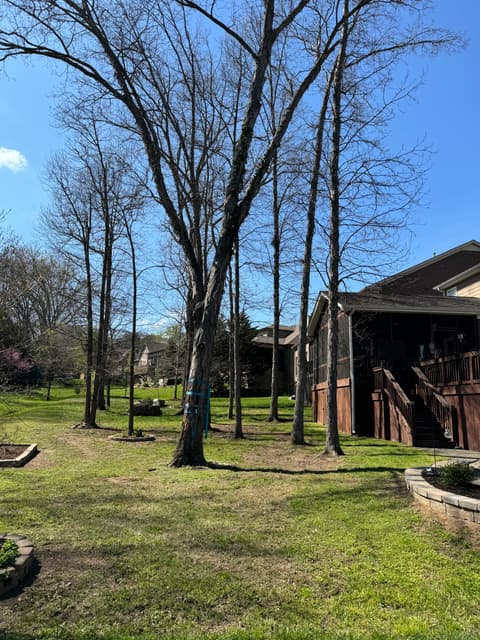
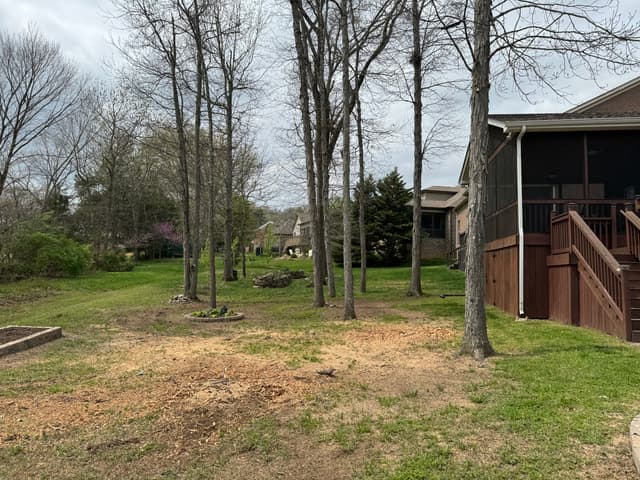
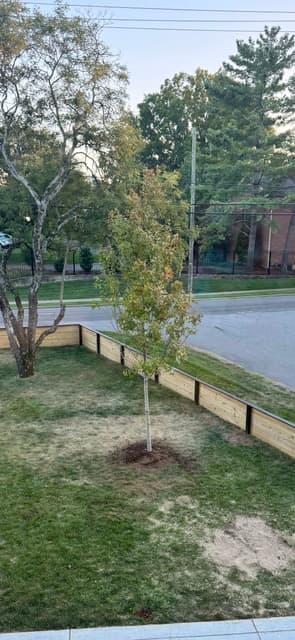
A mature common area lawn and tree canopy at a townhome community
Documentation

Everything we send is meant to be forwarded.

  • A written property assessment A standalone document. Hand it to the board, attach it to the minutes, send it to the insurer. Nothing in it needs explaining by us.
  • Per tree line items Every recommended job priced on its own line, so a board can approve six of nine and defer three without a new bid.
  • A photo record Before and after on every job, dated. This is what settles the owner who says the work never happened.
  • Per property invoicing One invoice per community, coded to that community, with photos attached. No splitting one bill across four budgets.
What every account gets

What a community gets on the program.

Written
Every tree photographed, located, and priced on its own line
Phased
Approve one phase now, budget the rest for next year
One contact
The same person for the scheduled round and the 2am call
Per property
One invoice per community, coded to that community
The difference

What a board is really choosing between.

A national chain

Franchise crews

Who looks at your trees

A salesperson quotes the tree you called about.

What the board receives

A proposal for one job.

Budgeting

Repriced every time you call.

Insurance

Insured, with claims routed through a franchise office.

Standards

Corporate playbooks applied unevenly.

The Certified Arborist Tree Service

Expert arborists, one standard

Who looks at your trees

An expert arborist walks the whole property before anything is quoted.

What the board receives

A written plan, photographed, priced per tree, phased.

Budgeting

A sequence you can drop into next year’s budget.

Insurance

The insurance that matters, the kind that protects every inch of your property. We will talk it through with your board before work begins.

Standards

Crews trained to ANSI A300 standards. Risk assessments follow TRAQ methodology.

The cheapest bid

"Whoever is driving the truck"

Who looks at your trees

Whoever is driving the truck.

What the board receives

A number on a business card.

Budgeting

No plan exists.

Insurance

Frequently uninsured, and the association finds out afterward.

Standards

Topping and spikes are still normal.

The Certified Arborist Tree Service

Expert arborists, one standard

Who looks at your trees

An expert arborist walks the whole property before anything is quoted.

What the board receives

A written plan, photographed, priced per tree, phased.

Budgeting

A sequence you can drop into next year’s budget.

Insurance

The insurance that matters, the kind that protects every inch of your property. We will talk it through with your board before work begins.

Standards

Crews trained to ANSI A300 standards. Risk assessments follow TRAQ methodology.

Everyone else

National chains and the cheapest bid

Who looks at your trees

A national chain

A salesperson quotes the tree you called about.

The cheapest bid

Whoever is driving the truck.

What the board receives

A national chain

A proposal for one job.

The cheapest bid

A number on a business card.

Budgeting

A national chain

Repriced every time you call.

The cheapest bid

No plan exists.

Insurance

A national chain

Insured, with claims routed through a franchise office.

The cheapest bid

Frequently uninsured, and the association finds out afterward.

Standards

A national chain

Corporate playbooks applied unevenly.

The cheapest bid

Topping and spikes are still normal.

When it cannot wait

The storm call goes to the same place as the pruning call.

No separate emergency vendor, no new account setup at midnight, no explaining which community you are. Call, name the property, and crews go.

  • One point of contact for the scheduled round and the storm call
  • A written plan the board can read and forward
  • Per property invoicing with photos attached
  • Licensed and insured, and glad to talk it through before work begins

Get Your Free Estimate

Fast response · No obligation

Service needed

By tapping Request My Free Estimate, you agree to be contacted by phone, text, or email about your project. No spam, and we never sell or share your information.

What people are saying

Rated 4.9 stars across 140+ reviews.

Real reviews from real customers, straight from our Google Business Profile. Here's what people say once the crew has packed up and the yard is clean.

JB
★★★★★

March 11th, a brief but strong storm came through Goodlettsville and blew over two giant trees in my front yard; one which was being supported by a 3rd tree that was facing and threatening my house. It was an…

Julie Bangs3 days ago
JM
★★★★★

From the time I inquired w this company about removing a tree that was strongly impacted from the major strong 80 mph winds on March 3, 2023, they provided us w exceptional service in every way . They were…

Jeanne Mason3 weeks ago
MD
★★★★★

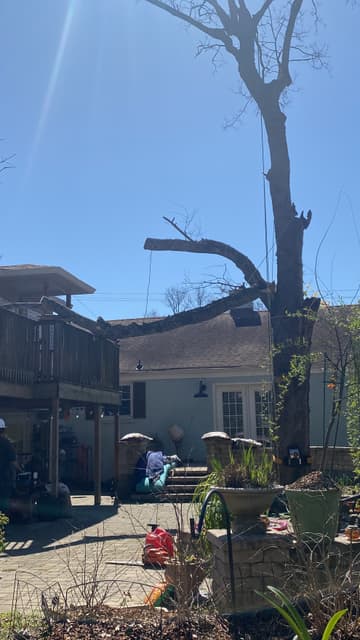
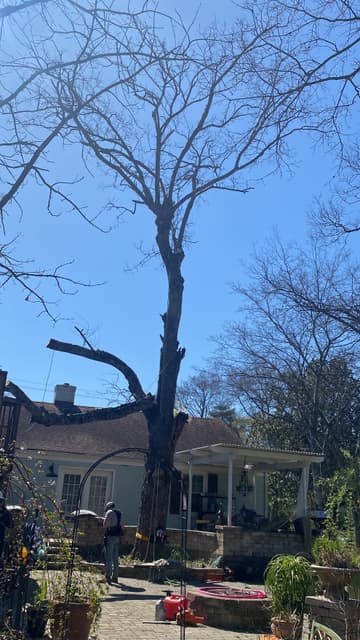
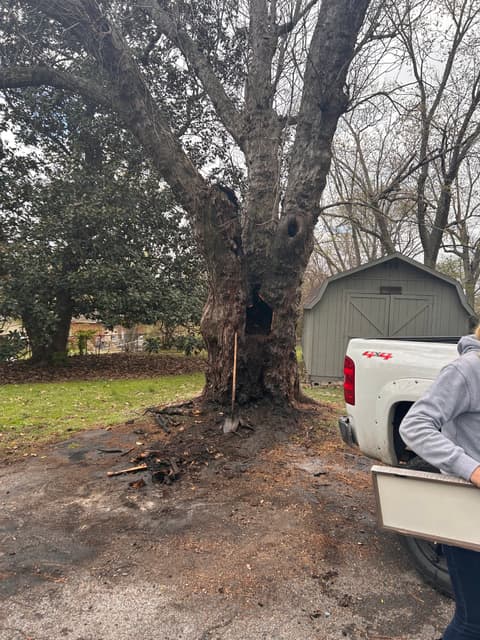
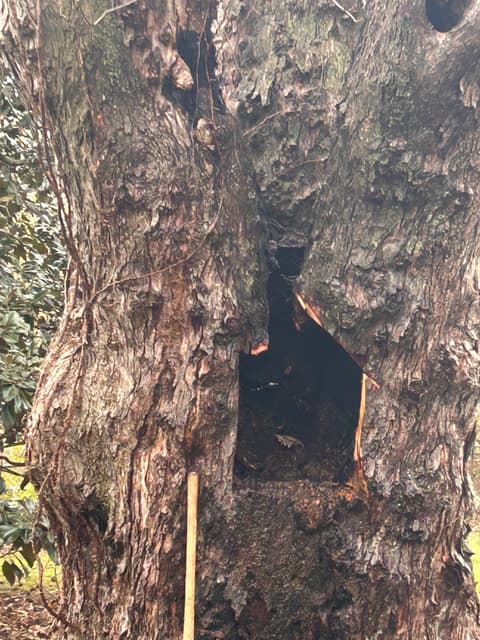
My family had a tree removal emergency! A large tree in our back yard was on fire and splitting down the middle. The fire department came out the night before to extinguish the fire, but when I woke up the…

Mysty Diehl6 weeks ago
The rest of our commercial work

Other programs built for teams with more than one property.

Questions

HOA and property management tree care: common questions.

The things boards and managers ask before the first walk.

How does an HOA board approve tree work?
Boards typically vote at a scheduled meeting, so the bid has to survive a packet and a room. We write the assessment as a standalone document: every tree photographed, located, and priced on its own line, grouped into phases. The board can approve one phase now and put the rest in next year’s budget.
Do you invoice each property separately?
Yes. Every property gets its own invoice with photos attached, coded to that association or community. A manager carrying a dozen associations should never have to split one bill across several budgets.
Can we budget tree care a year ahead?
That is the point of the written plan. After the first walk you get a sequence of work with prices, ordered by urgency, covering several seasons. Boards set budgets in the fall, so the plan is built to drop into that cycle without rework.
What happens when a tree comes down at 2am?
You call the same number you use for scheduled work. Crews clear the drive lanes and walkways first so residents can get out in the morning, then handle the tree itself. You get photos of the site before anything is moved.
Do you work with apartment and multifamily communities?
Yes, and they run on the same program. The difference is scheduling. We stage work around resident parking, trash pickup, and leasing tours so the drive lanes stay open during the day.
What paperwork do you provide for our vendor file?
Whatever your file requires, sent on request before the first job rather than chased after it. Send it straight into the board packet: nothing in it needs explaining by us. We are glad to talk through coverage with your manager or board before any work begins.
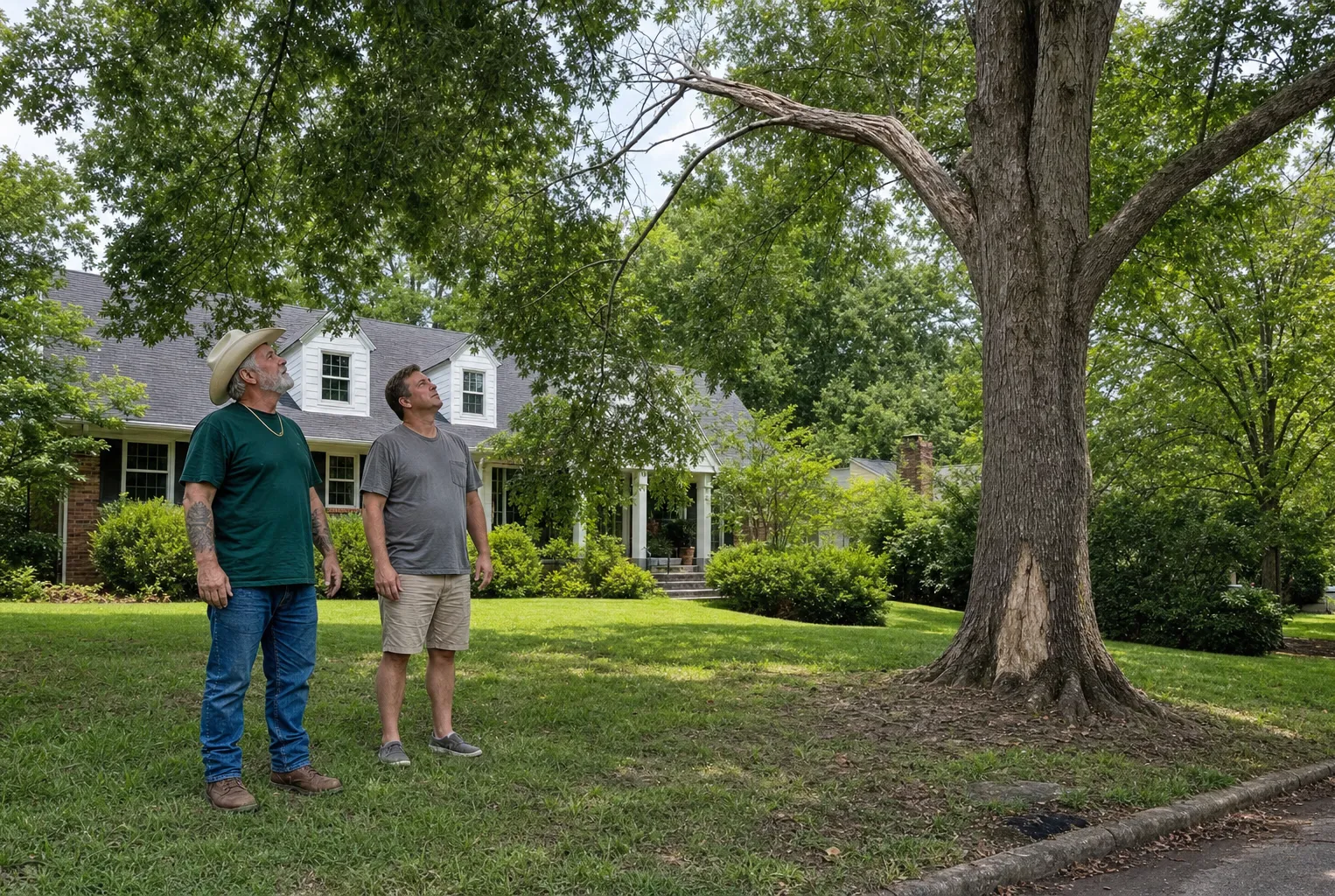
An expert arborist walking a homeowner through the plan for their trees
How we work

You'll get an arborist who's seen this exact tree problem a thousand times.

Estimates are handled by an experienced professional arborist, not a salesperson. That means honest diagnosis, plain language explanations, and a written plan you can actually act on. Our crews are trained to ANSI A300 industry standards to keep the work consistent and safe, but our real proof is the trees still standing on the streets we've worked for forty years.

The Insurance That Matters
Coverage built for tree work, protecting every inch of your property.
Expert Arborists
Estimates come from an experienced professional walking your property, not a script.
Year Round Service
Mon–Sun, 24 hours. We don't pause for the seasons.
Take back your trees today

One expert arborist. Every tree on your property.

Free estimate. Twenty-four-hour response. No contracts. No commitments.

Or call (844) 835-8733, answered 24/7 by a human.