Commercial storm response, with a dispatch window and a name attached to it.

A tree came down on a property you are responsible for. Call and a person picks up, takes the site details, and tells you when a crew is coming. Then you get the photos and the written scope your file needs when someone asks later.

Triage

Six things on a managed property that should not wait until morning.

If any of these describe your site tonight, call it in. Keep people out from under the tree until a crew gets there, because a loaded trunk or a hung limb can move without warning.

  • Blocked access A fire lane, a loading dock, a drive aisle, or the only exit from a lot.
  • Weight over people A hanger above a walkway, an entrance, a patio, a bus stop, or a play area.
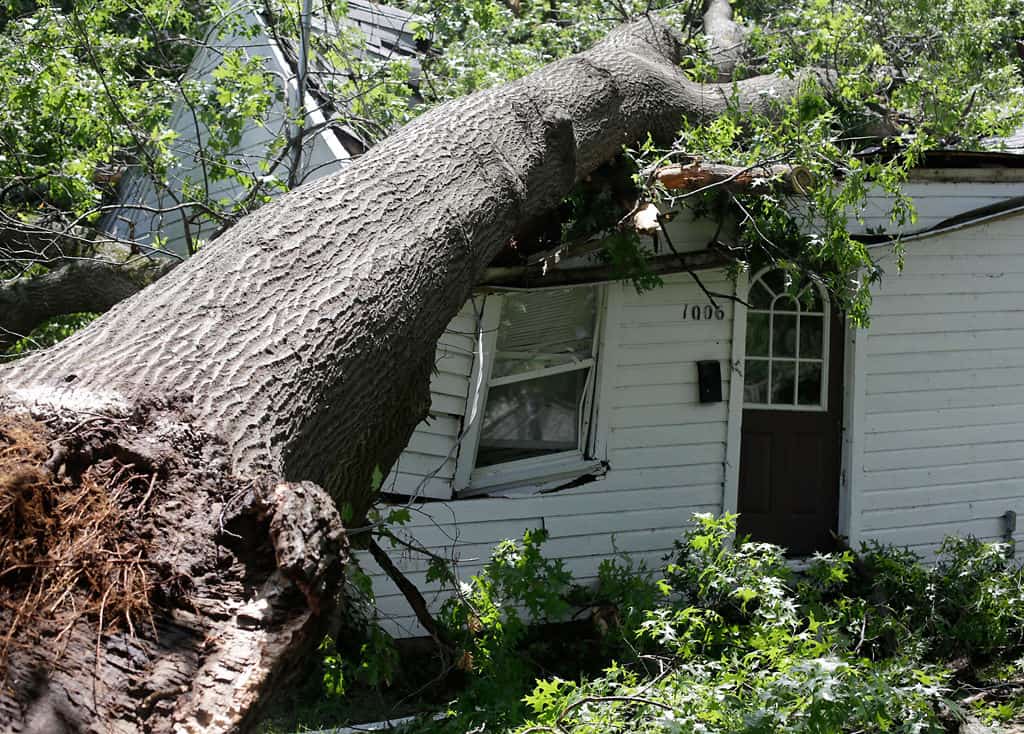
  • A structure taking load A limb or trunk resting on a roof, a canopy, a carport, or a wall.
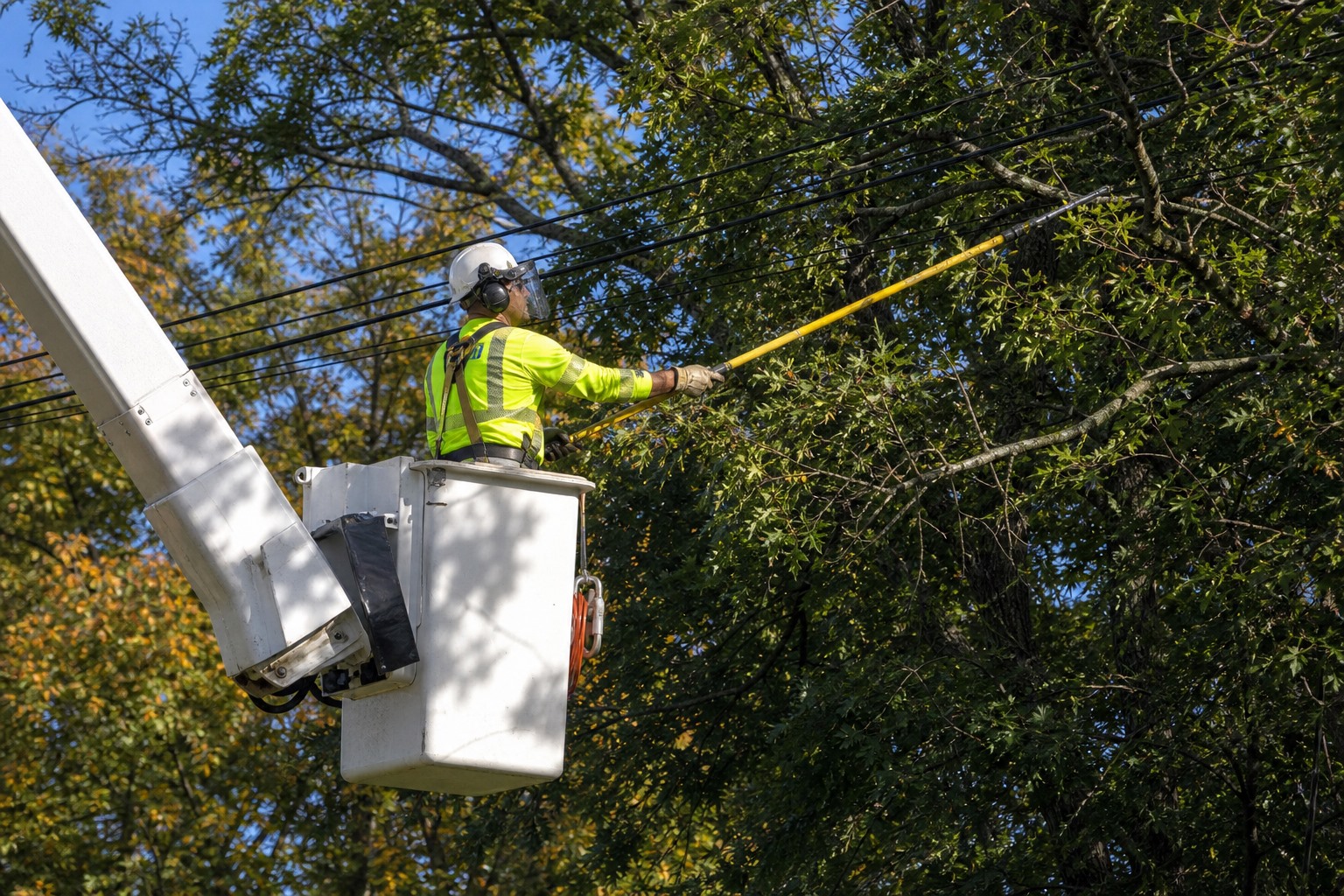
  • Near the utilities Anything touching or leaning toward a line or a transformer pad. Call the utility first, then us.
  • A trunk that changed A fresh split, a new lean, or soil lifting on one side of the base.
  • In public view A failure on a frontage, a fence line, or anywhere someone outside your property can walk up to it.
Dispatch

Four steps, starting the minute you call.

A committed window and a named contact on the first call.

You reach a person

Not a queue, and not a form that gets read on Monday. We take the site address, the gate or access detail, the contact onsite, and what is actually down.

You get a window and a name

A block of time a crew is committed to, and the person handling your site. After a regional storm we sequence by severity and tell you where you sit, rather than letting you wonder.

The crew works a live property

Foot traffic gets rerouted and parking is cleared where the bucket or the crane sets up. Drop zones stay clear while a load is in the air.

You get the record the same week

Before photos, after photos, the written scope, and a per property invoice, built so the person reviewing it next month can follow it.

The difference

The vendor you called first is already committed.

Cold calling after a regional storm

Strangers and a credit card

Who knows your site

Nobody knows the layout or who to call onsite.

Where you sit in the queue

You get whatever is left after their contract sites.

What the damage looked like

You reconstruct it from memory weeks later.

What you can forward

One total on one page.

Insurance

Insured, with claims routed through a franchise office.

The Certified Arborist Tree Service

Your property already on file

Who knows your site

Access, gate codes, and onsite contacts go on record before the weather.

Where you sit in the queue

You are sequenced with properties already on file with us, not behind them.

What the damage looked like

Documentation starts before the first cut, not after the invoice.

What you can forward

Before photos, after photos, a written scope, and a per property invoice.

Insurance

The insurance that matters, the kind that protects every inch of your property. We are glad to talk it through with your team before work begins.

A vendor seeing the site for the first time

A first visit during the worst week of the year

Who knows your site

The layout gets learned on arrival, in the dark.

Where you sit in the queue

Whenever a truck frees up.

What the damage looked like

A few phone photos, if anyone thought to take them.

What you can forward

A handwritten receipt.

Insurance

Frequently uninsured, and you find out afterward.

The Certified Arborist Tree Service

Your property already on file

Who knows your site

Access, gate codes, and onsite contacts go on record before the weather.

Where you sit in the queue

You are sequenced with properties already on file with us, not behind them.

What the damage looked like

Documentation starts before the first cut, not after the invoice.

What you can forward

Before photos, after photos, a written scope, and a per property invoice.

Insurance

The insurance that matters, the kind that protects every inch of your property. We are glad to talk it through with your team before work begins.

Everyone else

Cold calls and first time vendors

Who knows your site

Cold calling after a regional storm

Nobody knows the layout or who to call onsite.

A vendor seeing the site for the first time

The layout gets learned on arrival, in the dark.

Where you sit in the queue

Cold calling after a regional storm

You get whatever is left after their contract sites.

A vendor seeing the site for the first time

Whenever a truck frees up.

What the damage looked like

Cold calling after a regional storm

You reconstruct it from memory weeks later.

A vendor seeing the site for the first time

A few phone photos, if anyone thought to take them.

What you can forward

Cold calling after a regional storm

One total on one page.

A vendor seeing the site for the first time

A handwritten receipt.

Insurance

Cold calling after a regional storm

Insured, with claims routed through a franchise office.

A vendor seeing the site for the first time

Frequently uninsured, and you find out afterward.

The record

Paperwork built for the person who was never on site.

The claim, the board packet, and the vendor file all get reviewed by somebody who was not standing in the parking lot at 6am. Everything we hand you is written for that reader.

  • Before photos The site as we found it, shot before anyone touches anything.
  • After photos The same angles, so the two sets read side by side.
  • A written scope What was removed, what was stabilized, what is still standing and why, with dates and times onsite.
  • A per property invoice One document per site, so a portfolio does not arrive as one unreadable total.
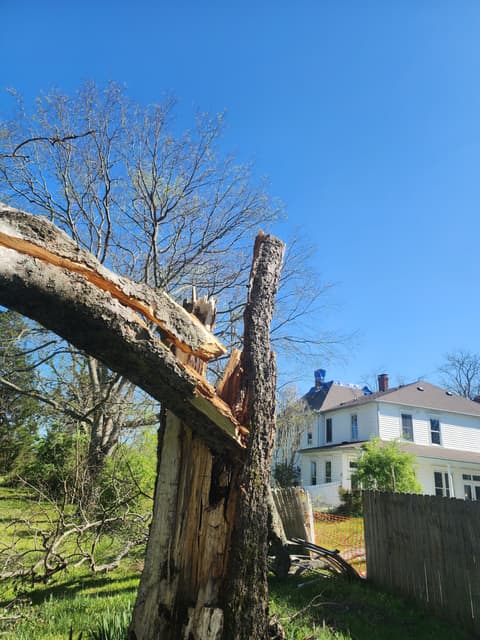
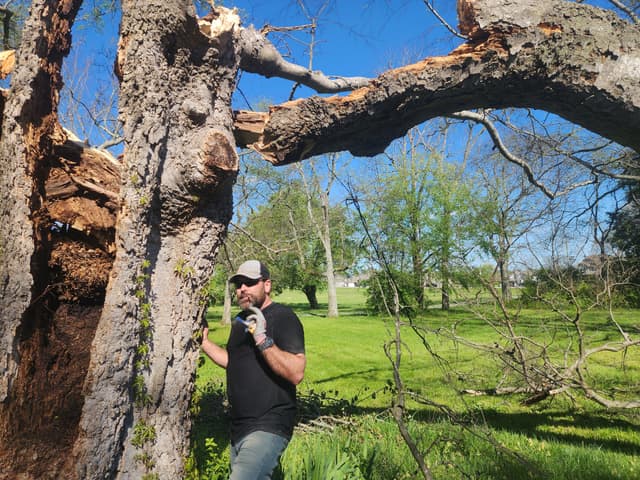
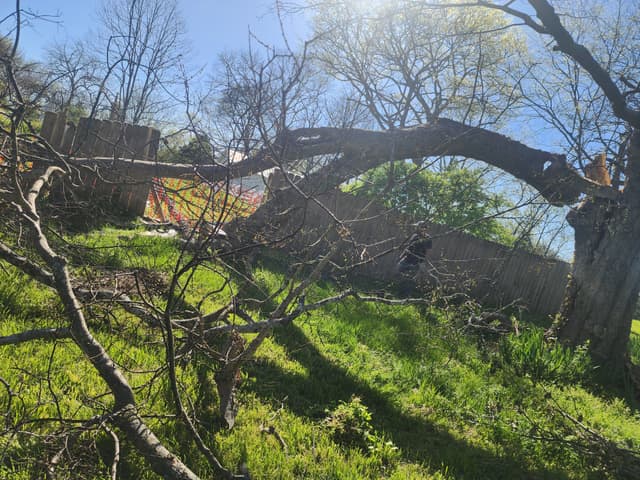
Storm damaged limbs down across a managed property after an overnight storm

Your carrier decides your claim. What we can do is make sure the record they ask for is already in your hands.

Photos before, photos after, the written scope, and a per property invoice, filed the same week.

Your property does not shut down while we work.

Emergency tree work on a commercial site usually happens with people still there. Tenants leaving for work, residents walking dogs, a shift changing, a delivery arriving. That gets planned before the saws start, not improvised around. If the property in question is a house rather than one you manage, our emergency tree service page is the one written for you.

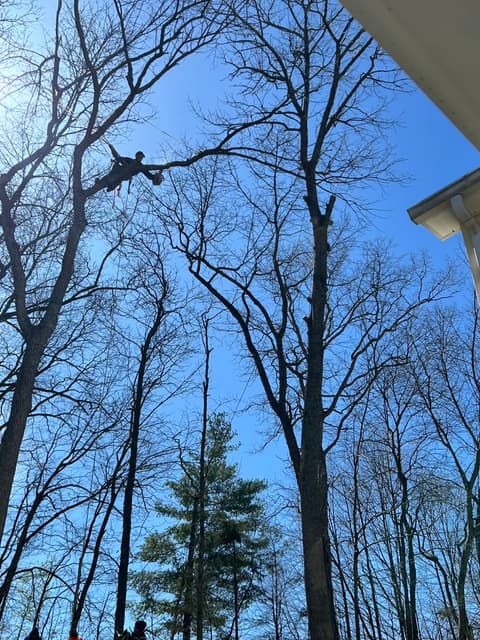
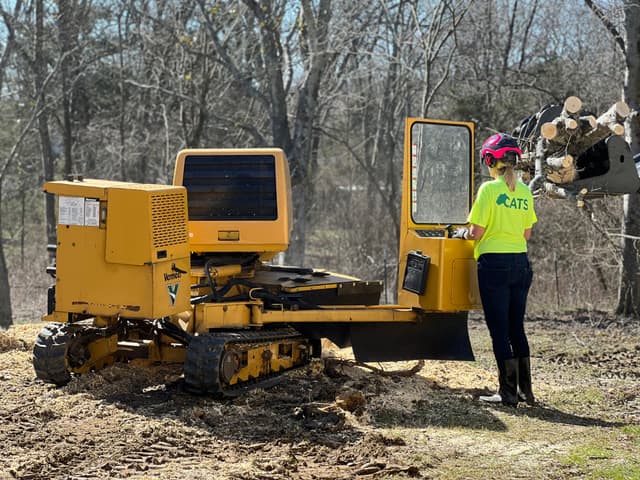
Drop zones get taped off and stay clear. Foot traffic gets routed away from the work. Parking is cleared where a bucket or a crane needs its footing, and the outriggers go down on solid ground, away from the pad you cannot afford to crack. Controlled lowering keeps a removal off the roof and off the cars below it.

If a lane, an entrance, or a unit has to close for a stretch, you get the timing in advance, so you can notify people before they find out by walking into tape.

Standards, safety plans, and the insurance question.

Crews are trained to ANSI A300 standards, the industry specification that treats topping, flush cuts, and spiking a tree that is staying as bad practice. Site assessments follow TRAQ methodology, so what gets flagged on your property is written down with the reasoning attached.

Safety plans and access requirements are yours to review before anyone arrives. So is the insurance question: we carry the insurance that matters, the kind that protects every inch of your property, and we are glad to talk through coverage with your team before work begins.

Between storms the same crews run scheduled programs under commercial tree service. A readiness walk before the season flags the trees most likely to fail, and storm readiness pruning runs under WindReady, which takes weight out of the canopies that carry too much of it.

Send site details

A crew pruning limbs clear of a road corridor ahead of storm season
Readiness

The cheapest emergency on a commercial property is the one that does not happen.

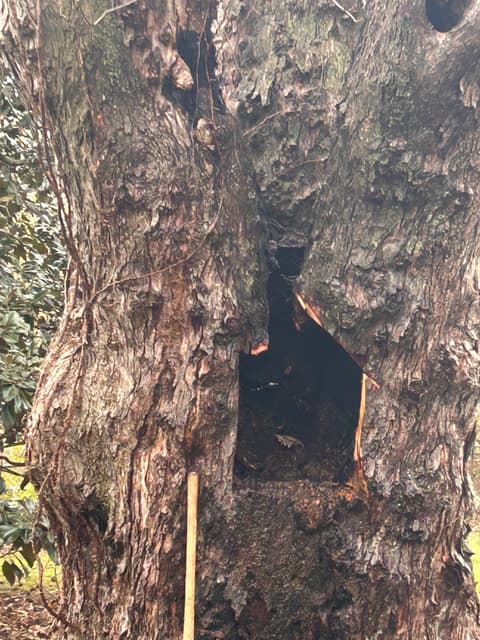
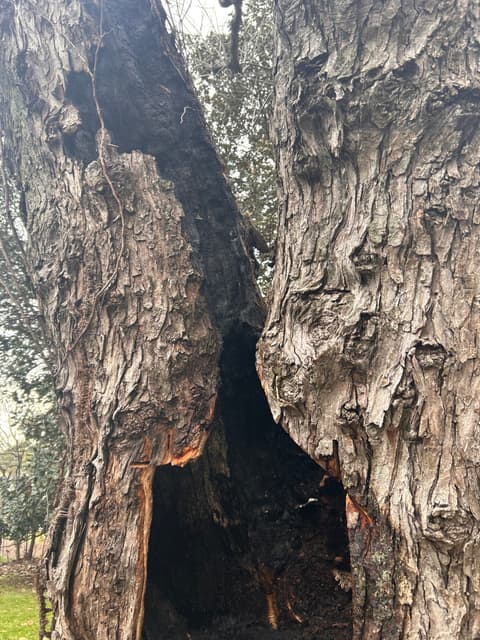
Most of what comes down at 2am was visible in daylight months earlier. A lean, a dead top, a co-dominant stem with a crack in the union, a canopy heavier than its roots can hold. A readiness walk finds those while the fix is still routine work on a scheduled day.

  • An expert arborist walks the property and names the trees that are the problem
  • A priority list with prices, ranked by what fails first and what it lands on
  • Access, gate codes, and onsite contacts on file before the weather
  • Fund the top of the list this year and put the rest into next year

Get Your Free Estimate

Fast response · No obligation

Service needed

By tapping Request My Free Estimate, you agree to be contacted by phone, text, or email about your project. No spam, and we never sell or share your information.

What people are saying

Rated 4.9 stars across 140+ reviews.

Real reviews from real customers, straight from our Google Business Profile. Here's what people say once the crew has packed up and the yard is clean.

JB
★★★★★

March 11th, a brief but strong storm came through Goodlettsville and blew over two giant trees in my front yard; one which was being supported by a 3rd tree that was facing and threatening my house. It was an…

Julie Bangs3 days ago
JM
★★★★★

From the time I inquired w this company about removing a tree that was strongly impacted from the major strong 80 mph winds on March 3, 2023, they provided us w exceptional service in every way . They were…

Jeanne Mason3 weeks ago
MD
★★★★★

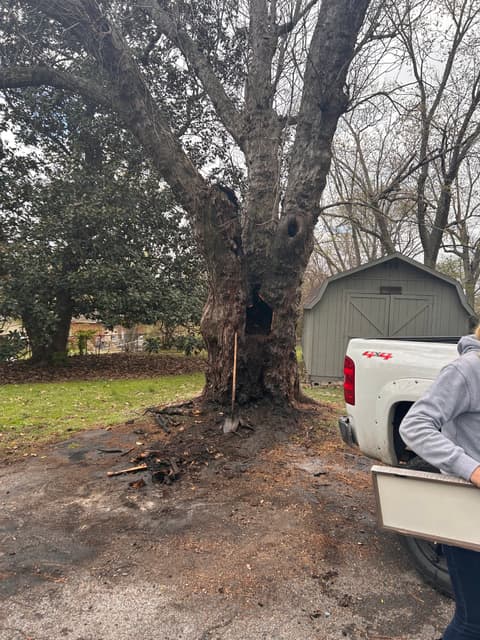
My family had a tree removal emergency! A large tree in our back yard was on fire and splitting down the middle. The fire department came out the night before to extinguish the fire, but when I woke up the…

Mysty Diehl6 weeks ago
Send site details
Tell us what is on the ground.

Site address, what happened, and how to reach you. If it is urgent, call instead. The form goes to the same people.

  • A committed window and a named contact on the first call
  • Documentation that starts before the first cut
  • Per property invoicing with photos attached
The rest of our commercial work

The rest of what we do for commercial property.

Questions

Commercial emergency response: common questions.

What operations and facilities teams ask before they hand over a site.

What counts as an emergency on a commercial property?
Anything blocking access, anything over a place people stand, and anything holding weight it was not built to hold. A limb across a fire lane, a hanger above a walkway or playground, a split trunk leaning toward a building, a tree on a fence line the public can reach. If it stops the property from operating or puts a person under it, call it in tonight.
What happens when I call after hours?
A person answers and takes the site address, the gate or access detail, and what is actually on the ground. You are given a dispatch window and the name of the person handling it. If the site needs to be closed off before a crew can reach it, you get told that on the call rather than at 7am.
What does a dispatch window actually mean?
It is the block of time a crew is committed to your site, given to you on the first call and updated if conditions change. After a regional storm, sites are sequenced by severity, so a blocked exit or a tree on an occupied building moves ahead of a downed limb on a lawn. You are told where you sit rather than left to guess.
What do we receive for our insurance file after the work?
Photos of the site before anyone touched it, photos after, the written scope of what was done, the dates and times onsite, and a per property invoice. That set is built for someone who was never onsite to read it later. Your carrier decides the claim, not us, but the record they ask for is in your hands the same week.
Can you work while tenants, residents, and the public are still on site?
Yes, and that is planned before the saws start. Drop zones get taped off, foot traffic gets rerouted, and parking is cleared where a crane or a bucket needs to set up. If a lane, an entrance, or a unit has to be closed for a stretch, you get the timing in advance so you can notify people.
Can we set this up before a storm instead of during one?
Yes, and it is the cheaper version. An arborist walks the property, flags the trees most likely to fail, and prices the work that removes the risk. Your access notes, gate codes, and contacts go on file at the same time, so a later emergency call starts with your site already known instead of starting from scratch.
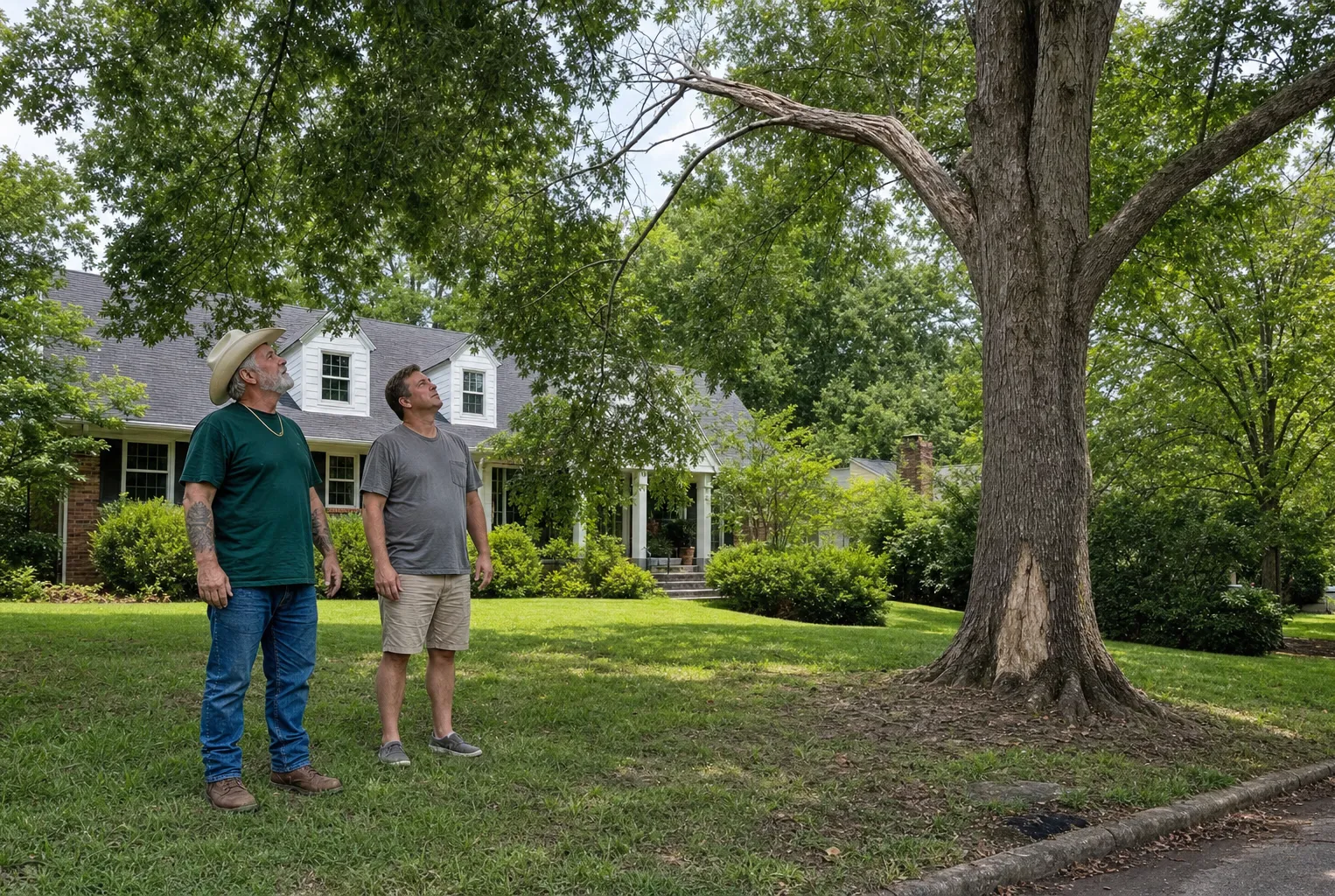
An expert arborist walking a homeowner through the plan for their trees
How we work

You'll get an arborist who's seen this exact tree problem a thousand times.

Estimates are handled by an experienced professional arborist, not a salesperson. That means honest diagnosis, plain language explanations, and a written plan you can actually act on. Our crews are trained to ANSI A300 industry standards to keep the work consistent and safe, but our real proof is the trees still standing on the streets we've worked for forty years.

The Insurance That Matters
Coverage built for tree work, protecting every inch of your property.
Expert Arborists
Estimates come from an experienced professional walking your property, not a script.
Year Round Service
Mon–Sun, 24 hours. We don't pause for the seasons.
Take back your trees today

One expert arborist. Every tree on your property.

Free estimate. Twenty-four-hour response. No contracts. No commitments.

Or call (844) 835-8733, answered 24/7 by a human.