Emerald Ash Borer in Nashville
The emerald ash borer has spread throughout Davidson County and Middle Tennessee, threatening ash trees with near certain mortality if left untreated. Our expert arborists help Nashville homeowners identify infestations early, protect healthy ash trees with systemic treatments, and safely remove trees that are too far gone.
The emerald ash borer (Agrilus planipennis) is one of the most destructive invasive insects to hit North American forests in the past century, and it is firmly established here in Middle Tennessee. Davidson County is under a state quarantine for EAB, meaning the beetle is confirmed and movement of ash wood, logs, and nursery stock out of the county is restricted. If you have ash trees on your property, the question is not whether EAB will arrive. It is whether your trees are already affected.
What Is the Emerald Ash Borer?
EAB is a small metallic-green beetle native to Asia. The adults are relatively harmless on their own. The damage comes from the larvae, which hatch beneath the bark and tunnel winding, S-shaped galleries through the cambium and phloem, the layers of living tissue that carry water and nutrients up and down the tree. Once those galleries cut off the vascular system, sections of the canopy begin to die. Untreated ash trees face effectively 100 percent mortality once an infestation takes hold.
How to Identify an EAB Infestation
EAB infestations often go unnoticed for a year or two because the early damage happens beneath the bark. By the time symptoms are obvious, the tree is frequently in serious decline. Watch for these signs:
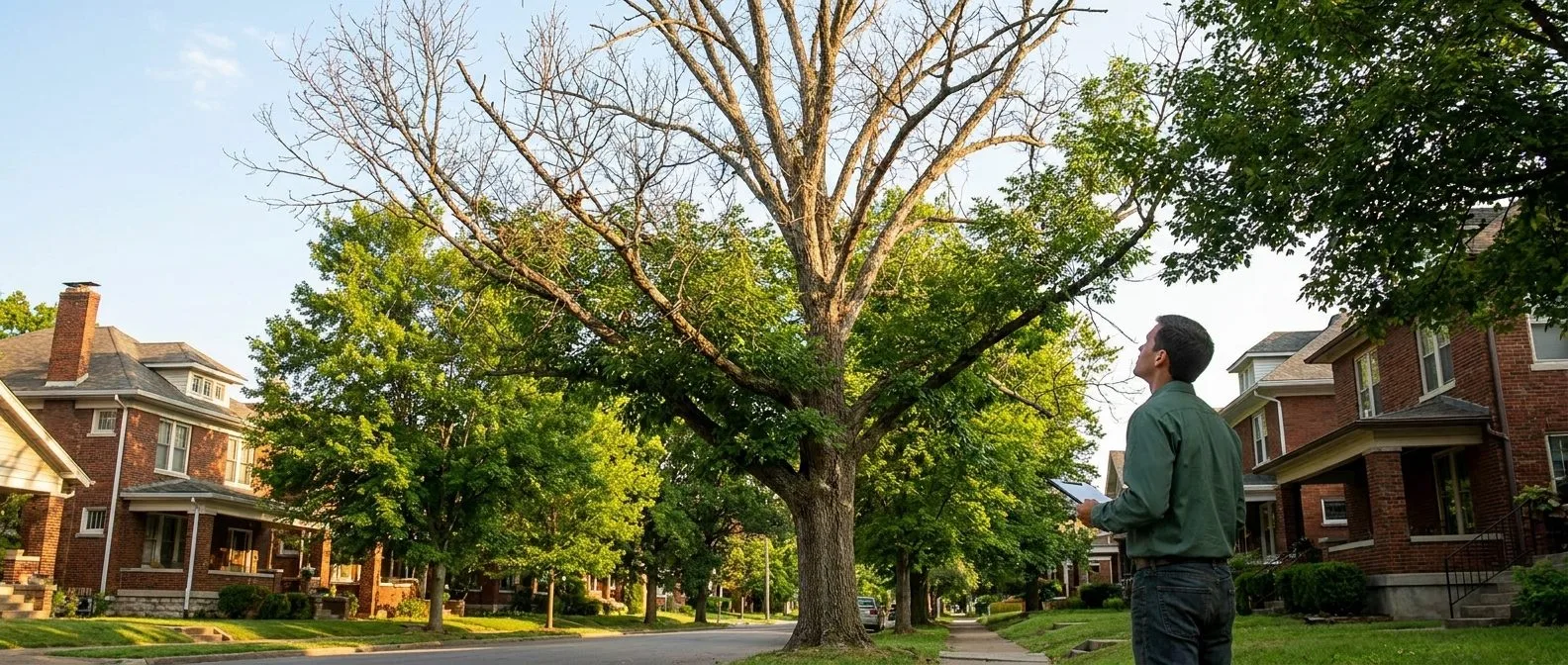
- Canopy dieback from the top down. Thinning and dying branches start at the crown and work their way toward the ground.
- D-shaped exit holes. When adult beetles emerge in late spring and early summer, they leave behind small, distinctly D-shaped holes about an eighth of an inch wide. This is one of the clearest identifiers.
- S-shaped galleries under the bark. If you peel back loose or splitting bark, you may see the winding larval tunnels packed with frass (a powdery sawdust residue).
- Bark splitting and cracking. As the tree declines, the bark may crack or pull away from the trunk.
- Heavy woodpecker activity. Woodpeckers feed on EAB larvae and will systematically strip bark from infested trees. Unusual flecking patterns on the bark are a reliable early warning sign.
Ash trees are identifiable by their opposite branching pattern, compound leaves with typically five to nine leaflets, and distinctive diamond-pattern bark on mature specimens. If you are not sure whether your tree is an ash, our arborists can confirm the species during an assessment.
Why EAB Is a Particular Problem in Nashville
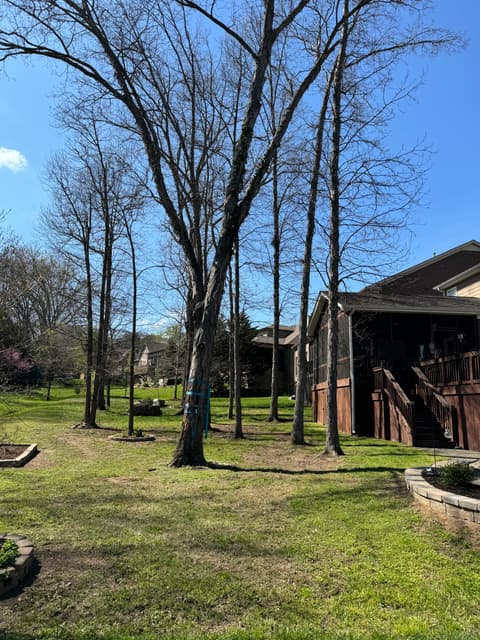
Nashville’s tree canopy includes a significant number of native white ash (Fraxinus americana) and green ash (Fraxinus pennsylvanica), planted as street trees and growing throughout wooded neighborhoods across the city. Our crews regularly encounter EAB-affected trees on the north and east sides of town, including East Nashville, Inglewood, Madison, Donelson, Hermitage, Goodlettsville, and Hendersonville.
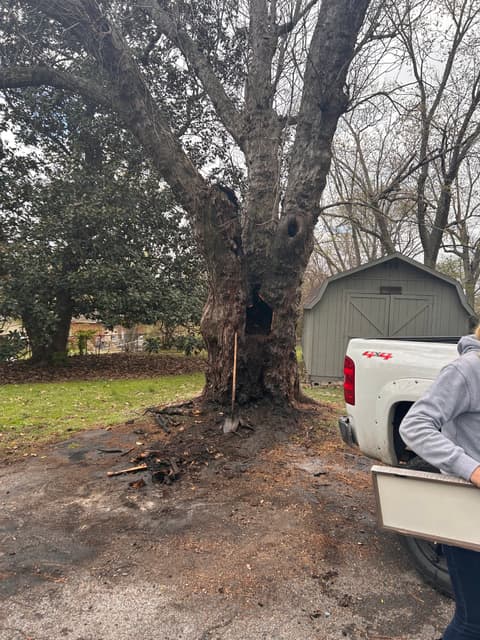
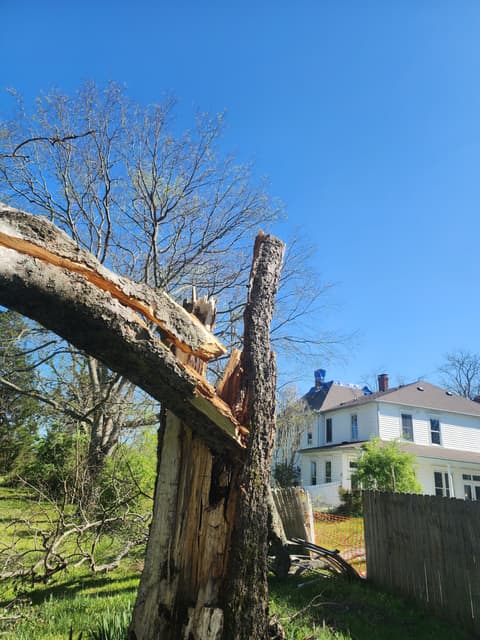
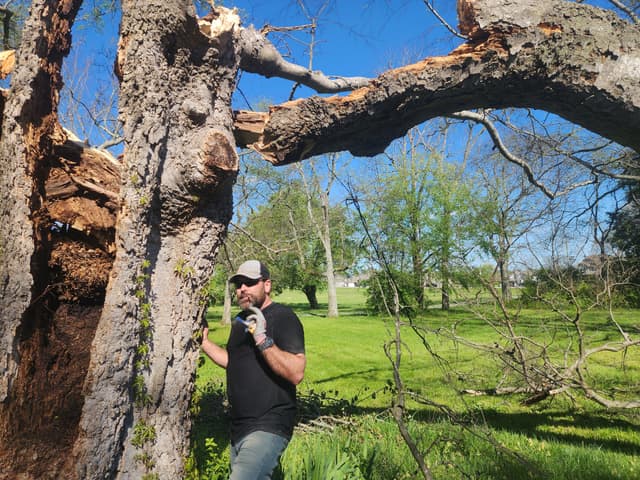
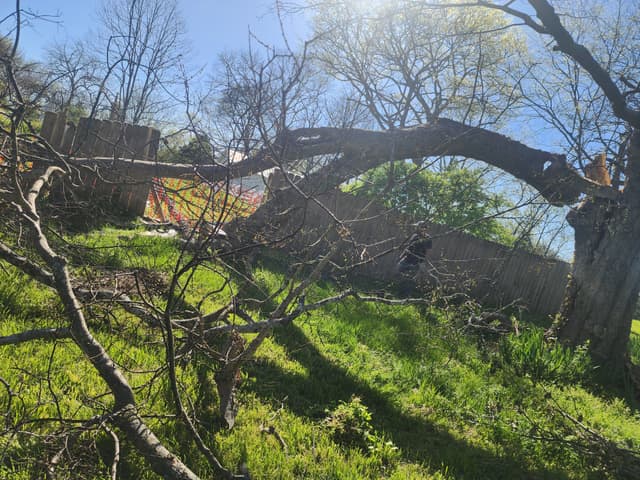
Middle Tennessee’s clay-heavy soils can already stress ash trees during hot, dry summers, reducing their natural vigor. A stressed tree is a more vulnerable tree. Once EAB is present, the decline can accelerate quickly. Trees that die standing in Nashville’s clay become brittle and unpredictable, especially after the ice events and wind storms that come through the region each winter. A dead or dying ash drops heavy limbs and can fail at the trunk with little warning.
Treatment and Removal Options
Protecting a Healthy Ash Tree
If your ash tree is healthy or showing only early-stage symptoms, systemic insecticide treatment is effective. Trunk injections or soil-applied treatments with products containing emamectin benzoate or imidacloprid can protect the tree by making the tissue toxic to EAB larvae. Timing matters: treatments are most effective when applied before severe infestation sets in, typically in spring as trees leaf out. Protective treatments need to be renewed on a schedule, so plan for ongoing maintenance.
Removing a Declining Ash
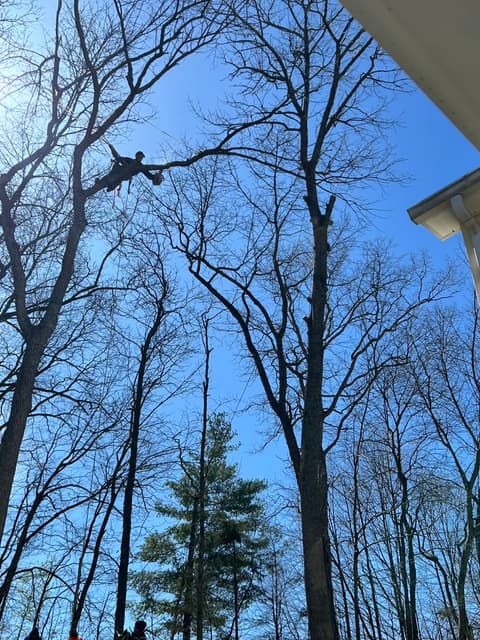
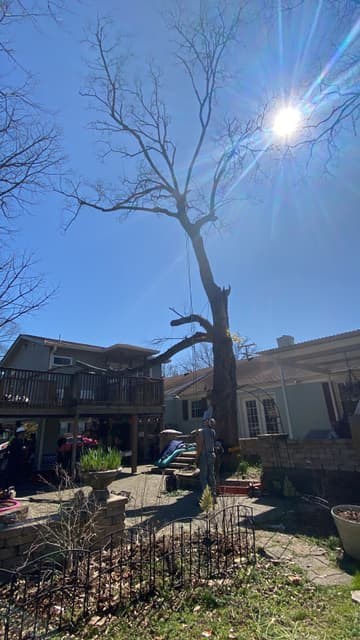
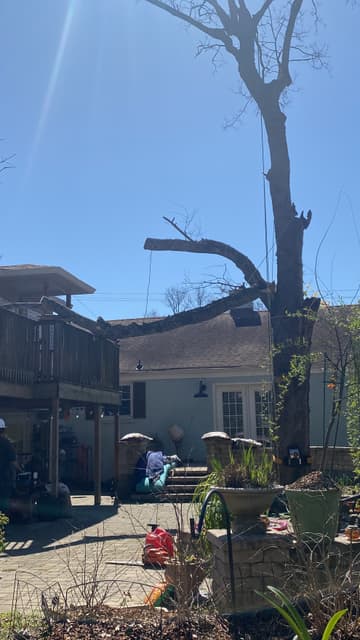
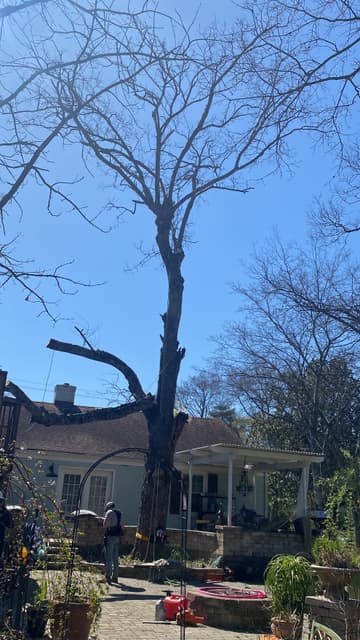
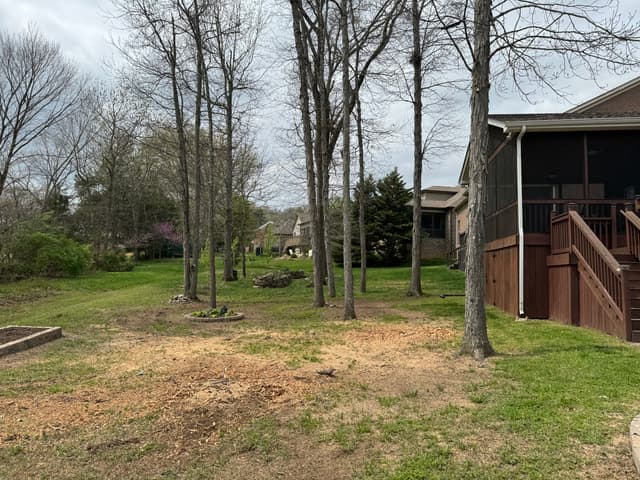
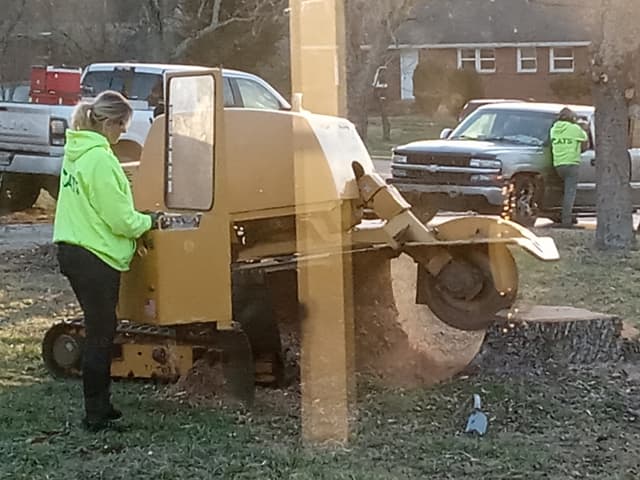
Once a tree has lost more than roughly half its canopy, treatment is rarely cost-effective and the tree is unlikely to recover fully. At that stage, removal is the responsible path. Beyond the tree itself, the concern is safety: a large, declining ash in your yard or near a structure is a liability. Planning the removal on your schedule, before the tree becomes a hazard, is almost always cheaper and safer than an emergency call after a limb fails.
What We Recommend
Every situation is different. A tree with minimal dieback and confirmed EAB pressure may be an excellent candidate for treatment. A tree that has been declining for two or three seasons may be past the window where treatment makes sense. The right answer depends on the tree’s current health, its location on your property, and your goals as a homeowner.
When to Call an Arborist
If you notice any of the symptoms above, the time to act is now, not next season. EAB moves fast once it is established in a tree, and the treatment window closes before most homeowners realize there is a problem.
Our credentialed arborists can assess your ash trees, confirm whether EAB is the cause of any decline, and lay out your options clearly. Whether that is a treatment plan or a safe, planned removal, reach out for a free on-site assessment and let us take a look before the decision is made for you.
Worried about this on your Nashville property?
An expert arborist will assess it in person and give you a written plan. Free estimate, no pressure.