Bradford Pear Structural Failure in Nashville
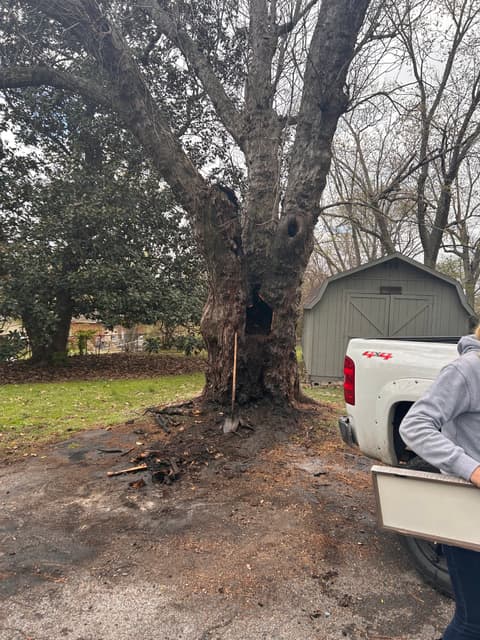
Bradford pear trees planted across Nashville's 1990s and 2000s subdivisions are now reaching the age when their weak branch structure fails, often without warning. This page explains why they split, how to spot a tree at risk, and what to do before it comes down on your house.
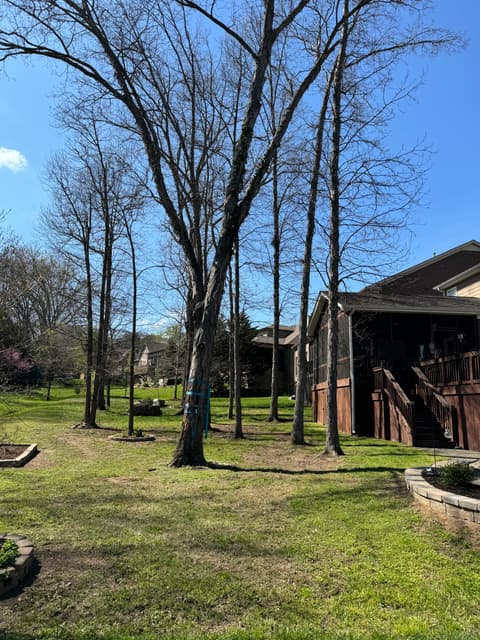
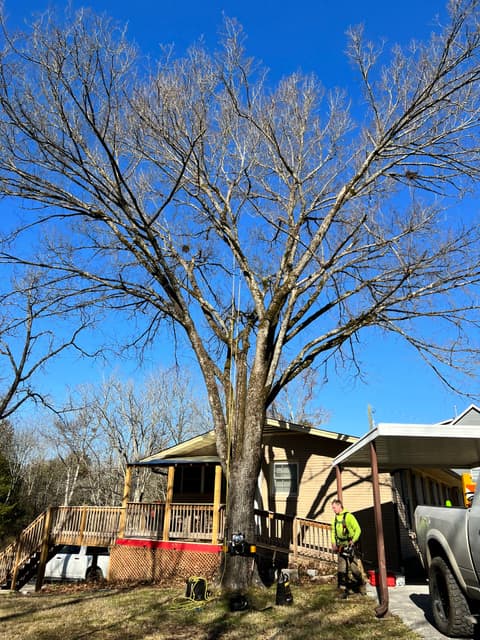
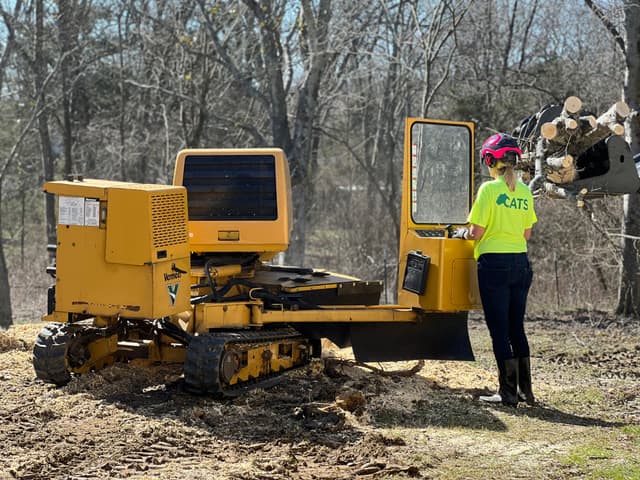
Bradford pear trees were planted by the thousands across Nashville’s growing suburbs in the 1980s, 1990s, and early 2000s. Developers loved them: fast growth, white spring blooms, and cheap availability. Today, those same trees are 20 to 35 years old, and our crews are removing them constantly across East Nashville, Inglewood, Madison, Donelson, Hermitage, Goodlettsville, and Hendersonville. The reason is always the same: the tree’s structure was never going to hold.
What Makes Bradford Pears Fail
The Bradford pear (Pyrus calleryana ‘Bradford’) is a cultivar of the Callery pear, a species native to China, Vietnam, Korea, Japan, and Taiwan. The cultivar was selected for ornamental use, not structural integrity, and it has a fundamental flaw baked into its genetics.
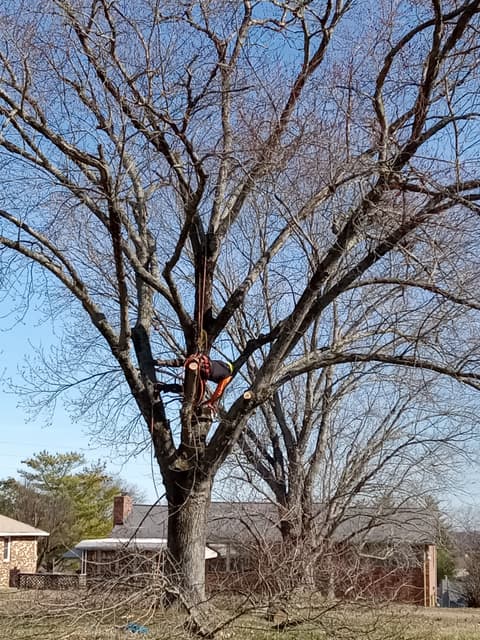
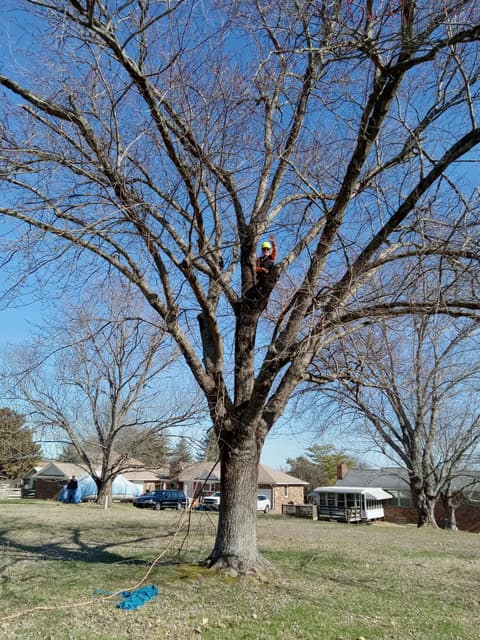
Bradford pears grow with an extremely narrow, upright branch habit. Multiple large branches arise from the trunk at nearly the same height and at tight angles, forming what arborists call codominant stems. Where those stems meet, bark gets trapped between them as the tree grows. This trapped bark, called included bark, prevents the wood from forming a proper union. The bond between branches is weak by design.
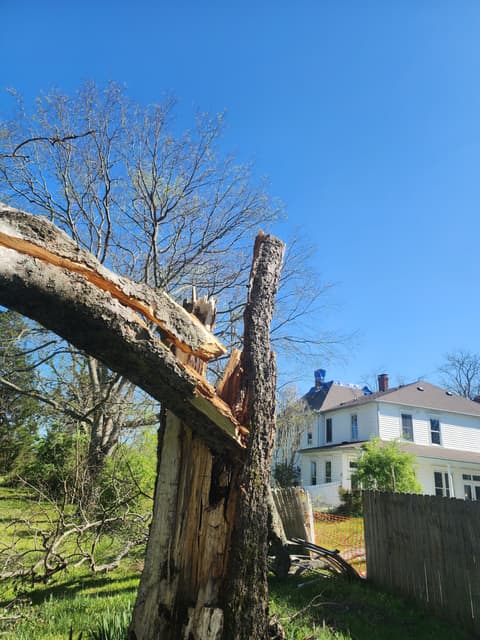
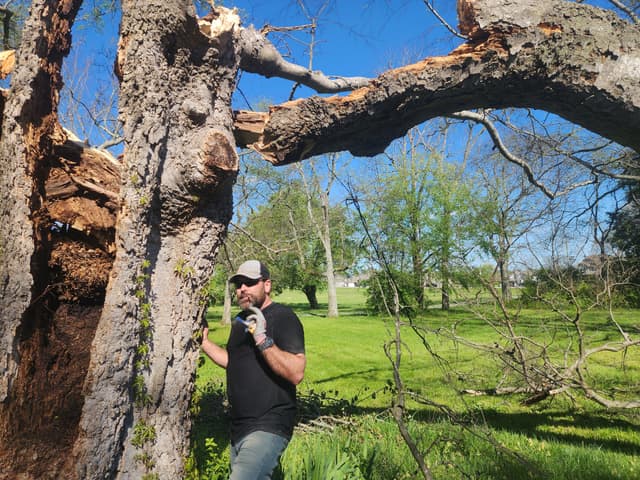
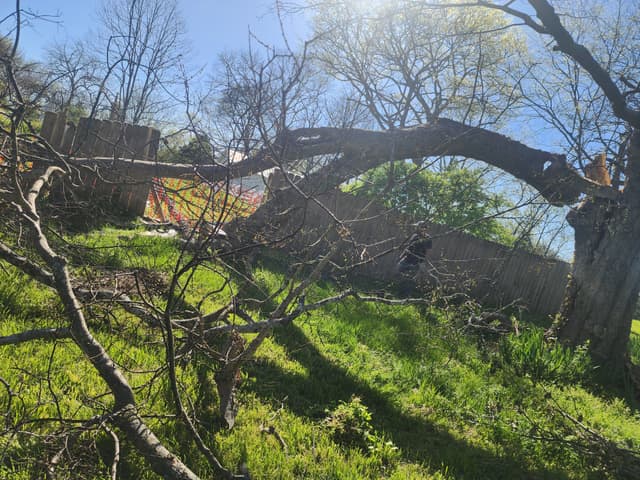
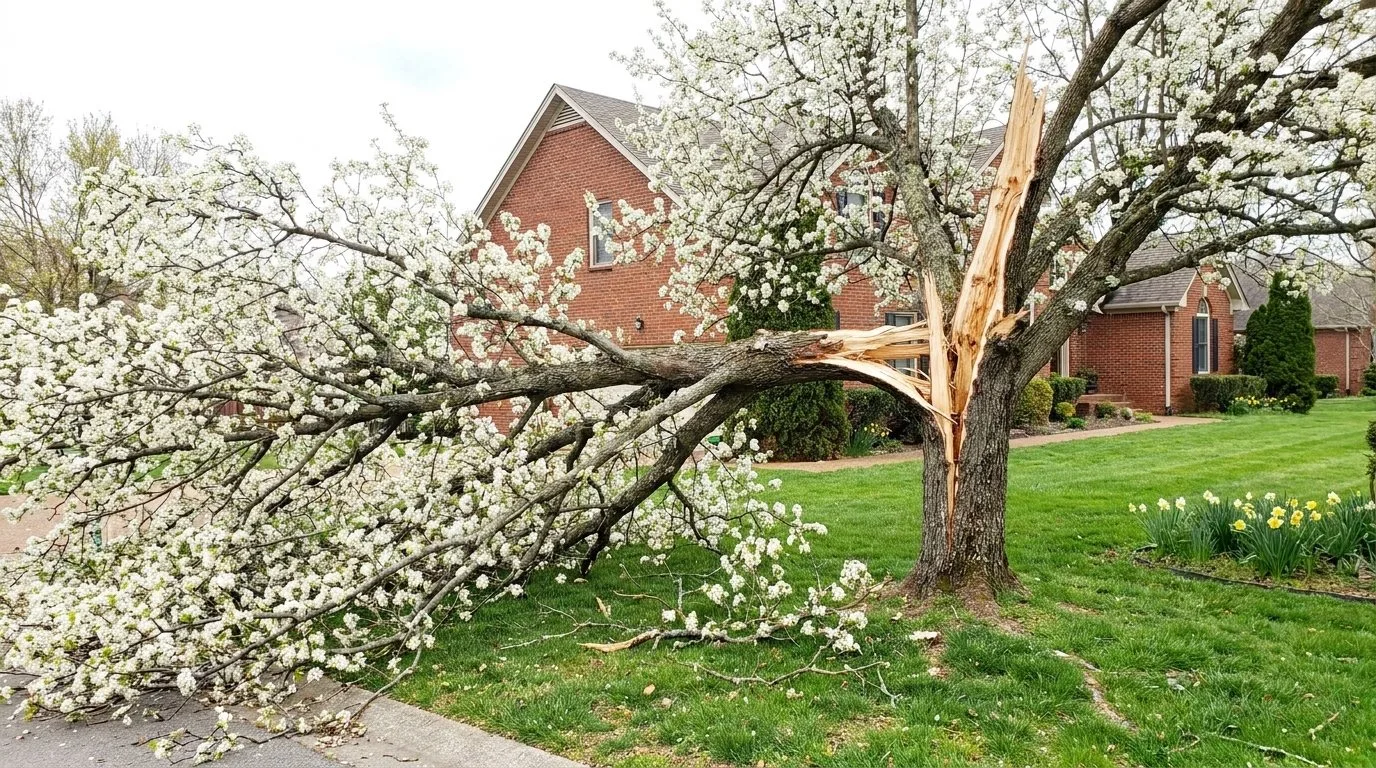
As the tree matures and the canopy fills out, the strain on those weak unions increases. Add a Nashville ice storm or a summer thunderstorm with straight-line winds and the result is predictable: major scaffold limbs peel away from the trunk, often taking out fences, vehicles, or rooflines in the process.
How to Identify a Bradford Pear at Risk
Age is the clearest indicator
Most Bradford pears reach structural crisis between 15 and 25 years of age. If yours was planted during a subdivision’s initial landscaping push in the 1990s or 2000s, it is likely in or past that window.
What to look for
- Tight V-shaped crotches where large branches meet the trunk. Healthy branch unions are U-shaped, not V-shaped.
- Bark ridges or seams running down into crotches, a sign of included bark underneath.
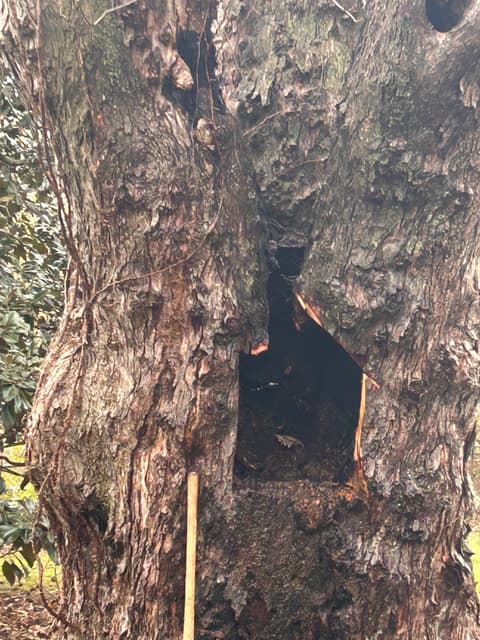
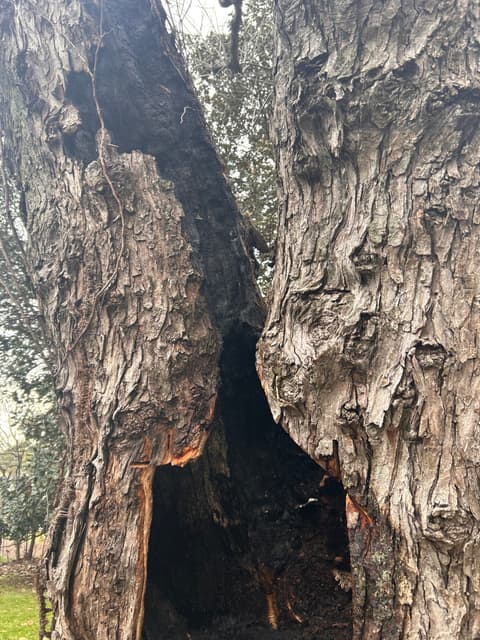
- Previous splits or cracks at branch unions, even small ones. Once included bark is exposed, the failure has already started.
- A broad, heavy canopy on a trunk that looks too slender to support it. Bradford pears grow top-heavy fast.
- Multiple codominant stems of similar diameter competing at the same height on the trunk.
In Davidson County’s heavy clay soils, these trees also tend to develop shallow root systems, which reduces their stability further, especially on slopes or in saturated ground after heavy spring rains.
Why This Matters for Nashville Homeowners
Nashville gets ice storms. The February 2021 event and several before it loaded canopies with ice weight that codominant stems simply cannot handle. A Bradford pear that looks perfectly healthy in October can shed a large limb in February with no prior warning signs visible from the ground.
Beyond the immediate hazard, Bradford pear is recognized as an established invasive threat in Tennessee by the Tennessee Invasive Plant Council. The trees produce fruit that birds distribute widely, and seedlings now colonize roadsides, forest edges, and open fields across the state. Removing a mature Bradford pear eliminates a seed source that has been producing fruit every fall.
What To Do With a Failing Bradford Pear
Cabling and bracing is rarely a long-term answer. Arborists can install supplemental support hardware, and it has legitimate uses on younger trees with correctable defects. But included bark does not heal. The union remains weak, and the forces on it increase as the tree grows. For most mature Bradford pears with significant codominant structure, cabling buys time at best.
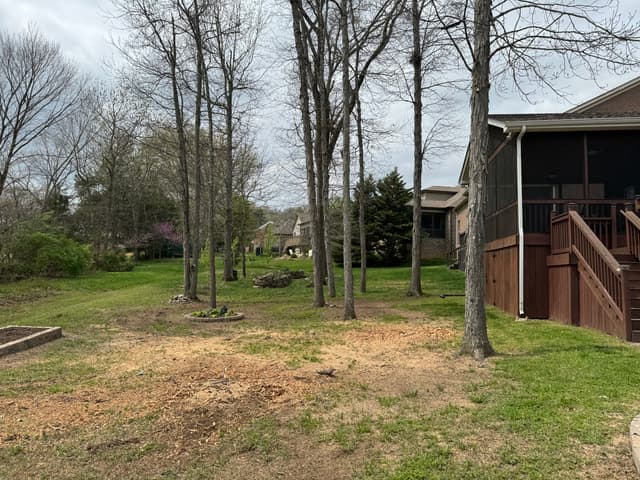
Removal is the right call. Once a Bradford pear has developed significant codominant structure and included bark, removal is the responsible choice. This is not a species that can be structurally corrected through pruning at maturity.
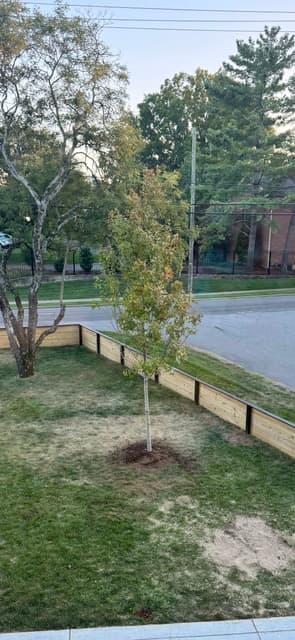
Replant with a structurally sound species. Nashville’s climate supports excellent alternatives. Native choices like serviceberry (Amelanchier spp.), redbud (Cercis canadensis), and sweetbay magnolia (Magnolia virginiana) offer ornamental interest without the liability. For a similar canopy size and flower show, consider a disease-resistant crabapple or a trident maple.
When To Call an Arborist
Call before the next storm, not after. If your Bradford pear is more than 15 years old, has a wide canopy, or shows any of the warning signs listed above, a ground-level visual assessment is worth scheduling now. Our expert arborists see these trees regularly across Nashville’s north and east side and can tell you quickly whether yours needs immediate action or can be monitored.
Reach out to request a free assessment. We will walk the tree with you, explain exactly what we are seeing, and give you a straight answer about timing and risk.
Worried about this on your Nashville property?
An expert arborist will assess it in person and give you a written plan. Free estimate, no pressure.