Construction Damage to Tree Root Zones in Nashville
Soil compaction from construction equipment is one of the most common and overlooked causes of tree decline in Nashville. Damage to the critical root zone often goes undetected for three to five years, long after the project is finished.
Construction activity is one of the leading causes of mature tree loss across Nashville, and most property owners never connect the two. A remodel completed in 2021 can easily be the reason a backyard oak is dying in 2026. The damage happens underground, silently, while the job site looks perfectly normal above grade.
How Construction Damages Tree Root Zones
Trees depend on a web of fine feeder roots concentrated in the top twelve to eighteen inches of soil. This is where oxygen, water, and nutrients are absorbed. When construction equipment rolls over that zone, the soil particles compress, pore spaces collapse, and roots lose access to everything they need to survive.
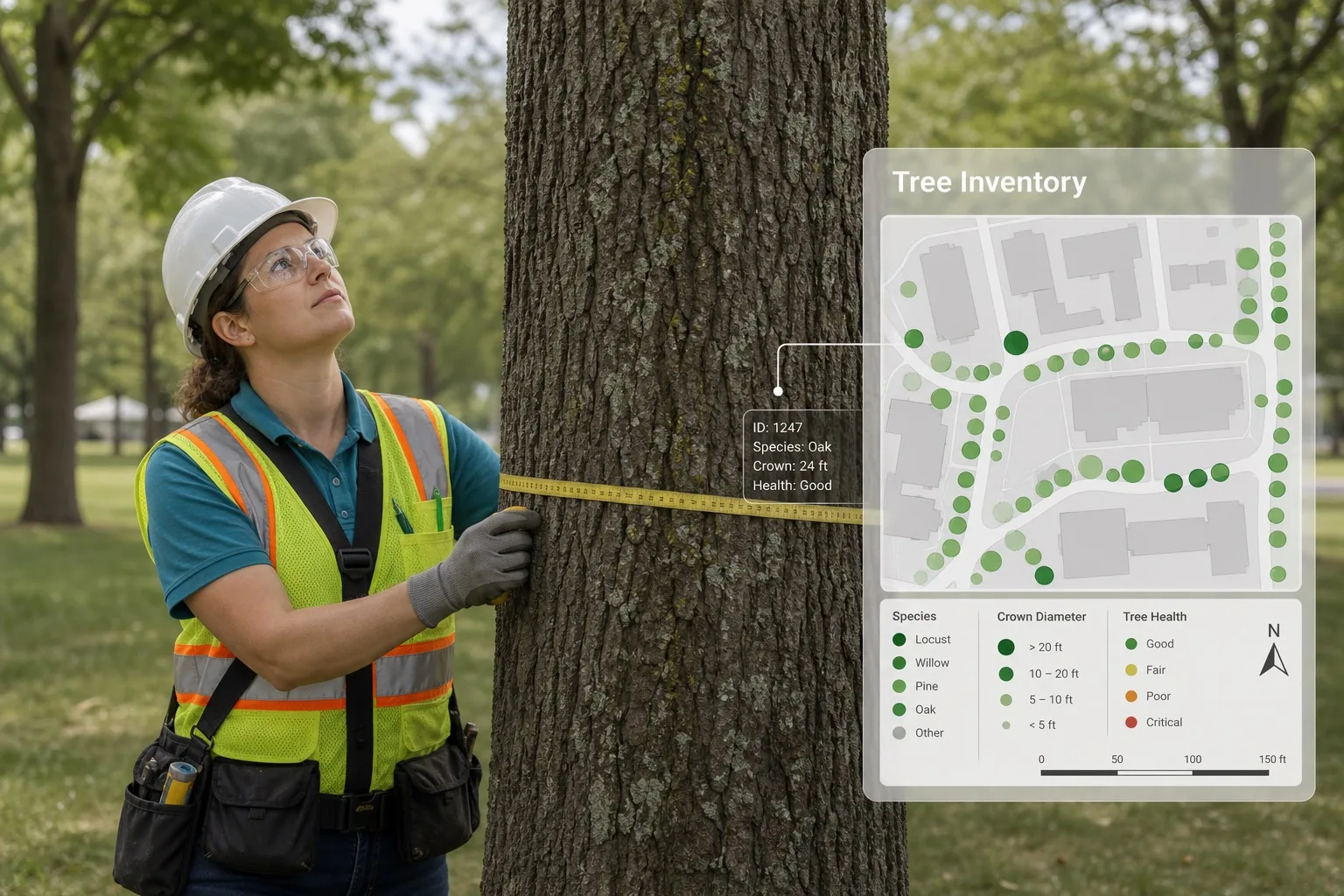
The affected area is called the critical root zone (CRZ), roughly a circle with a radius of one foot for every inch of trunk diameter. For a mature red oak (Quercus rubra) with a twenty-inch trunk, that is a twenty-foot radius in every direction. Parking a single concrete truck once is enough to cause measurable compaction across that entire zone.
The Three Main Mechanisms
- Skid steers, dumpsters, delivery trucks, and foot traffic from crews compact soil with repeated passes, often well outside the drip line.
- Adding or removing even a few inches of fill soil over the root zone smothers existing roots or exposes new ones to temperature extremes. Nashville’s clay-heavy soils hold compaction especially well once it sets.
- Gas, fiber, and drainage work that cuts through the CRZ severs roots directly. A single trench through the inner half of the root zone can remove a substantial share of a tree’s absorbing capacity.
Symptoms: What You Will See (and When)
The cruelest aspect of construction root damage is the delay. Trees have stored energy reserves that can mask the injury for years. In Nashville, our crews regularly assess trees on the north and east side of Davidson County, including East Nashville, Inglewood, Madison, Donelson, Hermitage, Goodlettsville, and Hendersonville, where residential construction and lot infill have been relentless over the past decade. The pattern is consistent: symptoms appear three to five years after the work was done.
Watch for:
- Leaves become smaller and less dense, starting at the branch tips and working inward. Arborists call this canopy thinning.
- Foliage turns yellow or red weeks ahead of neighboring trees of the same species.
- Branch tips die back first, then larger scaffold branches fail over successive seasons.
- Water sprouts along the trunk or major limbs are a distress signal, not a sign of vigor.
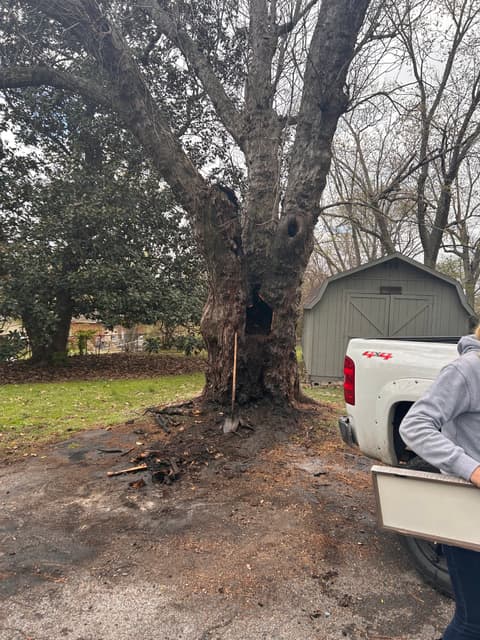
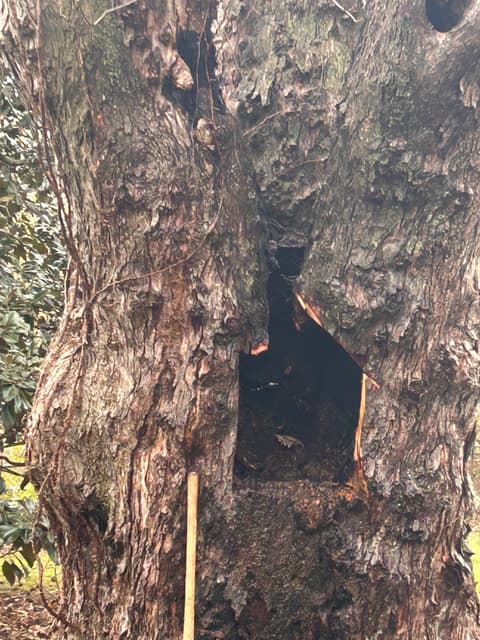
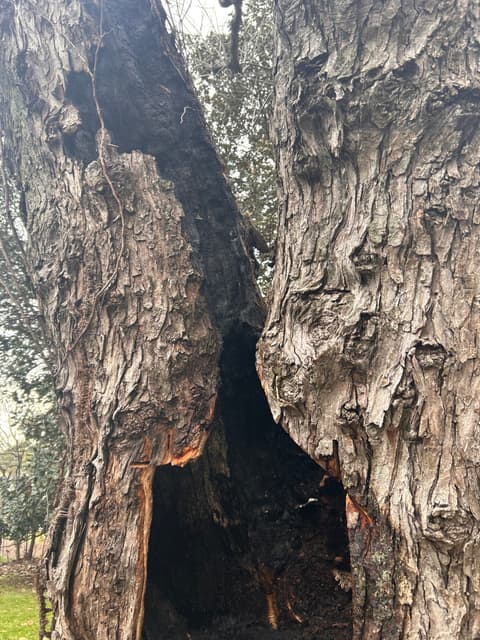
- Advanced decline often invites secondary pathogens that crack bark or produce fungal conks, both of which accelerate structural failure.
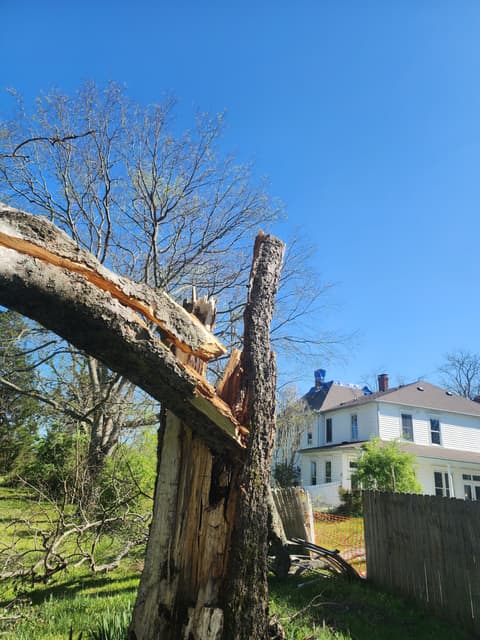
Nashville’s occasional ice storms compound the problem. A tree already weakened by root zone compaction carries a much higher risk of catastrophic limb or stem failure under ice load.
What Can Be Done
Early intervention gives the best outcomes. Once a tree has lost a significant portion of its canopy, full recovery is unlikely, but stabilization and extended useful life are often achievable.
Treatment Options
- Air spading uses a pneumatic tool to fracture compacted soil around the root zone without cutting roots. This reopens pore spaces and lets oxygen and water back in; organic matter, compost, or coarse wood chip mulch is then worked into the loosened soil.
- Radial aeration trenches are cut shallow and outward from the trunk, introducing organic matter and improving drainage in clay soils without the severing damage of straight-line trenching.
- Deep root fertilization gives a stressed tree supplemental nutrition, though it works best alongside physical soil remediation rather than as a standalone fix.
- A two to four inch layer of wood chip mulch over the entire CRZ insulates roots, retains moisture, and prevents further compaction from foot traffic.
When Removal Is the Right Call
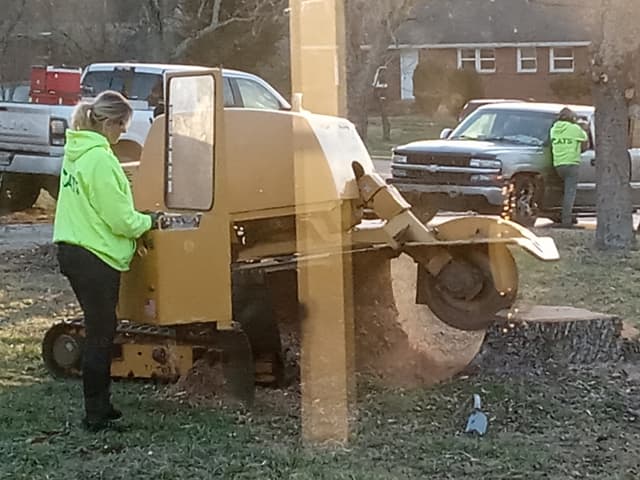
Some trees are too far declined to save safely. An expert arborist can evaluate structural integrity alongside canopy health. If the tree poses a risk to structures, people, or neighboring trees, prompt removal protects everything around it.
When to Call an Arborist
If any construction project, including a neighbor’s renovation, utility work in the right-of-way, or a driveway expansion, occurred within the last ten years within or adjacent to your trees’ root zones, a professional assessment is warranted. Early stage compaction damage is largely invisible without knowing what to look for.
Our expert arborists assess root zone conditions, soil density, and canopy health together to give you a clear picture of where your trees stand and what, if anything, can be done. Request a free assessment and we will take a look.
Worried about this on your Nashville property?
An expert arborist will assess it in person and give you a written plan. Free estimate, no pressure.