Your Guide to Linden Trees: Shade and Beauty for…
If you’re looking for a tree that anchors your landscape with strength and beauty, a linden (Tilia species) might be the perfect choice.
These trees have a stately presence, softened in summer by fragrant blossoms and in fall when their heart-shaped leaves turn yellow before falling for winter. Their flowers are a favorite of bees, which produce the famously sweet linden honey. And even in winter, their sturdy form adds quiet elegance to the landscape.
How Big Do Linden Trees Get?
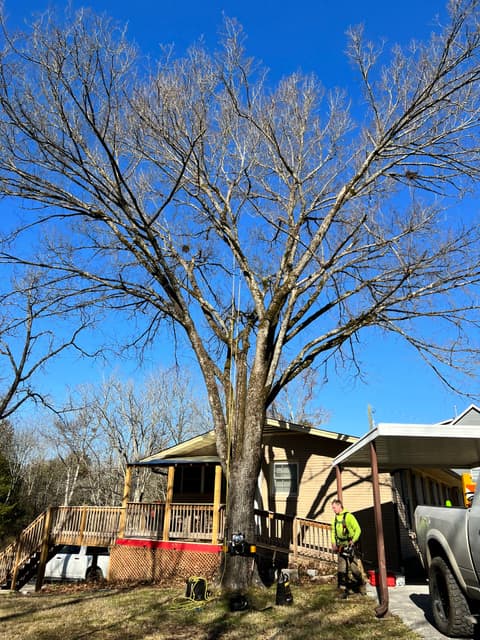
Most lindens reach between 50 and 70 feet tall, with a broad, rounded canopy that creates generous shade. Their size makes them ideal for larger properties, parks, and wide streets.
Potential Challenges: What to Watch For
Linden trees are hardy, but they have specific needs. If these needs aren’t met, problems may arise.
Lindens benefit from proactive pruning to prevent codominant stems and weak branch structure before those problems compound.
Soil drainage matters more than most people expect. Lindens planted in soil that doesn’t drain well can develop root rot, which stresses the tree and opens the door to secondary infections and insect pressure. Well drained soil is a baseline requirement, not a bonus.
Sunlight affects more than just growth rate. While lindens tolerate partial shade, they produce denser foliage and more abundant blooms in full sun, so placement matters.
Watch for aphids, which are common on lindens. Aphids leave behind sticky honeydew that coats leaves and anything beneath the canopy, attracts ants and wasps, and encourages sooty mold. An otherwise healthy tree can handle a light infestation, but heavy pressure calls for intervention.
Japanese beetles also target lindens, feeding on foliage and sometimes skeletonizing entire leaves, which reduces the tree’s vigor. Healthy trees tolerate minor damage, but severe infestations may require professional insect management.
Leaf scorch is another thing to watch during hot, dry spells. Browned leaf edges are the tell. Consistent watering, mulching, and professional care go a long way toward preventing it.
Choosing the Right Linden for Your Space
- American Linden (Tilia americana): a classic large shade tree with broad leaves and a strong, spreading form. Thrives in hardiness zones 3 to 8.
- Littleleaf Linden (Tilia cordata): a smaller, more refined tree suited to urban planting and tighter spaces. Thrives in hardiness zones 3 to 7.
- Silver Linden (Tilia tomentosa): identifiable by its silvery leaf undersides, this variety is highly drought-tolerant once established. Thrives in hardiness zones 4 to 7.
Caring for Your Linden Through the Seasons
Lindens are low maintenance once established, but a little attention goes a long way, particularly in early life.
Once mature, lindens are fairly drought tolerant, but during establishment deep watering is essential to help saplings develop strong roots.
Mulch helps significantly. Apply a 2- to 3-inch layer to retain moisture and regulate soil temperature, and keep it away from the trunk to prevent root rot.
Lindens respond well to pruning, but timing matters. The dormant winter season, before new growth begins, is usually the best window. Remove dead or crossing branches to maintain structure and improve air flow. For young trees, early structural pruning that establishes strong branch spacing and a balanced canopy pays dividends for decades, reducing future pruning needs and supporting long-term stability.
Regional Considerations
Lindens adapt well to many climates, but extremes can pose challenges. In hot, dry regions like Nashville summers, selecting drought-resistant varieties such as the Silver Linden is wise. Consult with an expert arborist to determine the best linden tree for your region and your exact property conditions. Soil drainage, sun exposure, and proximity to structures all matter significantly.
Frequently Asked Questions
How fast do linden trees grow? American Linden can put on 1.5 to 2 feet per year when properly sited and watered deeply during establishment. That growth rate means structure needs attention early. Without early pruning, codominant stems form quickly.
Are linden trees messy? The leaves and seed clusters are manageable, but aphid honeydew is the real nuisance. It coats patios, cars, and anything else under the canopy, and attracts sooty mold. If your linden is near a living space, proactive insect management is highly encouraged.
Do linden trees have invasive roots? Linden tree roots aren’t considered invasive, but surface roots are a warning sign. They typically mean compacted soil is forcing roots upward. Mulching, aeration, and making sure the root flare was planted correctly at installation will address the cause.
How long do linden trees live? Linden trees can live for centuries when given the right start. It’s why structural pruning while the tree is young is so important.
When do linden trees bloom? Early to midsummer, and full sun drives a strong bloom. Trees in shade will flower reluctantly, if at all. The fragrance is distinct. Bees find it from a distance.
Are linden trees good for small yards? Most aren’t. At 50 to 70 feet, a linden is a lot of tree, and a cramped planting site creates problems that compound over decades. Before planting, have an expert arborist evaluate your site for soil drainage, sun exposure, and proximity to structures.