Deep Root Fertilization for Trees | When to Do it and…
What Is Deep Root Fertilization?
Deep root fertilization (DRF) refers to the injection of a liquid nutrient solution into the soil surrounding your tree, anywhere from 6 to 8 inches below the surface. This unique process reaches your tree’s feeder roots, which are responsible for most of your tree’s nutrient uptake, maximizing nutrient delivery throughout the tree.
This method differs from traditional surface fertilization in three important ways:
- It bypasses compacted soils, so nutrients reach deep feeder roots that surface applications simply can’t access.
- Nutrients go exactly where they’re needed. Surface fertilization spreads across turf, mulch, and layered soil, and much of it never reaches tree roots at all.
- It’s applied by qualified arborists using specialized injection equipment, which makes the process faster and more precise than surface techniques.
While surface fertilization has its place for turf and shallow-rooted plants, deep root fertilization is often the superior choice for established trees.
Signs Your Tree Needs Deep Root Fertilization
Some trees clearly signal when they’re not getting proper nutrients, while others struggle silently. If you’re unsure whether your tree would benefit from professional deep root fertilization, look for visible symptoms and environmental risk factors.
Visible Symptoms of Nutrient Deficiency
If your tree displays any of the signs below, it may be struggling to absorb key nutrients from the soil:
- Yellowing leaves often point to an iron or nitrogen deficiency.
- A thinning canopy signals stress and weakened growth.
- Stunted growth is a common sign the tree is not producing enough energy to keep pace.
- Trees shedding leaves ahead of schedule may be doing so to conserve resources.
These symptoms sometimes indicate insect or disease issues. But they often also suggest a need for deep root fertilization. Your arborist will be able to tell the difference and design a custom plan.
When is Deep Root Fertilization Necessary?
Even if your tree appears healthy, certain landscape conditions make deep root fertilization beneficial, or even necessary:
- Trees growing in lawns, sandy soils, or compacted urban soils, where grass competes heavily for nutrients and compacted soil blocks air and water movement.
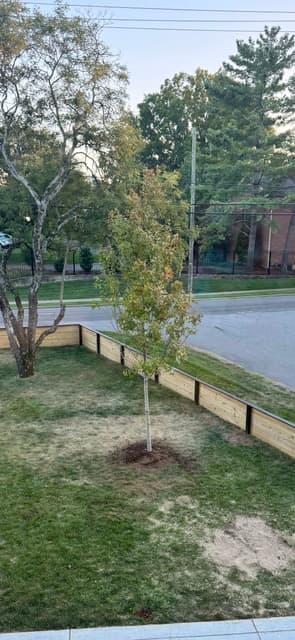
- Newly transplanted trees, where young trees establishing a root system benefit enormously from targeted feeding.
- Trees recovering from drought, construction stress, or disease, where fertilization supports regrowth, energy reserves, and stress recovery.
Benefits of Deep Root Fertilization for Tree Health
Because deep root fertilization targets the feeder root zone, trees under treatment can absorb nutrients more efficiently than with surface applications. This can improve root density, structural stability, and overall nutrient storage capacity, resulting in deeper colors, consistent leaf growth, and better flowering in ornamental species.
Deep root fertilization also helps your tree manage and withstand environmental stressors, supporting canopy growth and helping your tree stand strong throughout the seasons. Properly nourished trees live longer, with fewer corrective treatments, and experience fewer periods of decline.
When is the Best Time for Deep Root Tree Fertilization?
Though timing may vary by tree variety, climate, and soil conditions, early, mid, and late season treatments are designed to work best in their respective seasons. No matter when your particular tree needs it, there’s a deep root fertilization approach that can help.
An expert arborist can assess your soil conditions and recommend a schedule tailored to your landscape.
Why Hire a Professional for Deep Root Fertilization?
While root feeding may sound simple, DIY applications can lead to missed feeder zones, over-fertilization, and incorrect nutrient feedings, all of which compromise soil health rather than improving it. Self-applied fertilization efforts are often shallow, whereas professional fertilization provides deep root feeding that addresses soil issues and delivers nutrients exactly where they’re needed.
Specialists and credentialed arborists use specialized, high-pressure soil injection tools to reach the correct depth. They pair this with slow release fertilization, root collar excavation, and vertical mulching to optimize for your tree’s health.
What to Expect During the Deep Root Fertilization Process
A deep root fertilization service is an efficient, non-invasive process tailored to each tree’s specific needs.
The visit begins with an assessment, where an expert arborist evaluates your landscape, soil conditions, and the overall health of your trees. The process does not disturb your property. Small injection holes close up quickly, and all evidence of the injections is gone within a few days of treatment.
Results may take a season to fully appear, and it may take some time to fully correct any issues, but deep root fertilization is a great way to get the process started.
Frequently Asked Questions
What does deep root fertilization do for trees?
Deep root fertilization can be thought of as a bypass for the obstacles standing between a tree and the nutrients it needs to thrive. In compacted or turf-heavy soil, surface-applied fertilizer rarely reaches the active feeder roots. Deep root fertilization delivers nutrients directly to the root zone while loosening surrounding soil, allowing roots to access more oxygen and water.
Is deep root fertilization worth it?
For trees dealing with compacted soil, slow growth, or early signs of decline, the value is significant. An assessment before treatment is always a good idea, since the right nutrient mix and timing vary by tree and soil type. As part of a tailored care plan, it tends to be one of the more impactful investments you can make for your property.
How deep does root fertilization go?
The probe used for deep root fertilization is entered 6 to 8 inches below the surface into the root system, beyond the grass and the compacted layer, into the zone where feeder roots take up nutrients. We apply in a grid pattern around the tree to reach all roots.